The Built Environment Case Competition (BECC) 2026 wrapped up on 15 August at Bridge+ @ Geneo. This year’s brief was “Singapore 2050: Designing Inclusive and Smart Living Futures,” and it drew 92 teams and 237 students from NUS, NTU, SUTD, SMU, the polytechnics, and several overseas universities.
Founded in 2019 by the NUS Civil Engineering Club, BECC exists to close the gap between what students learn in school and what the industry actually deals with day to day. Every year, the competition partners with industry players to set a real case topic, giving students a shot at solving genuine built environment problems with guidance from working professionals along the way.
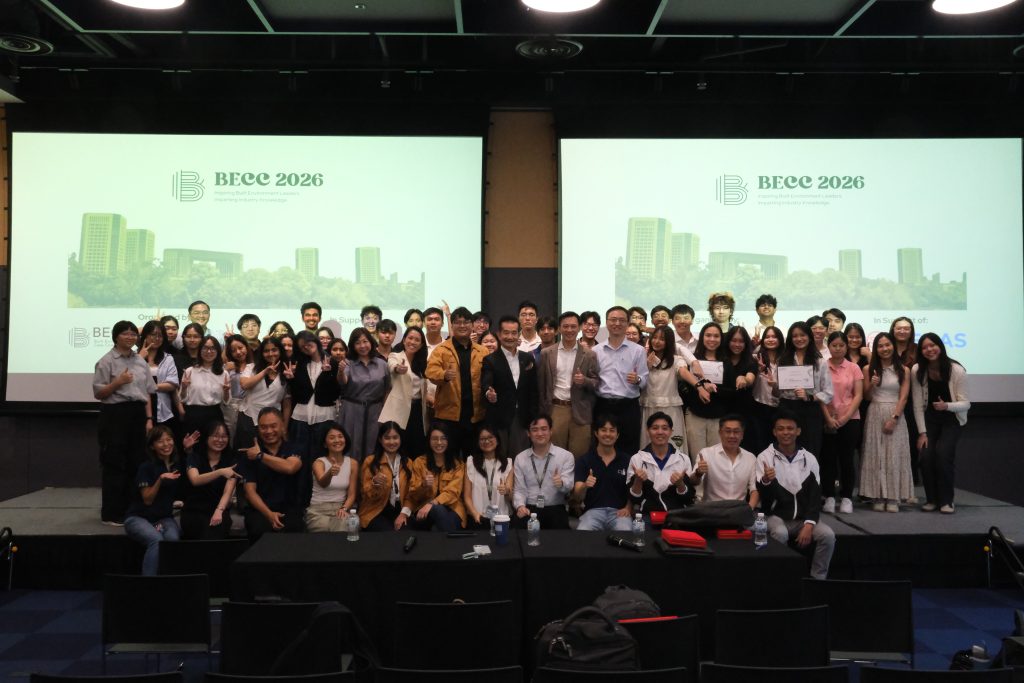
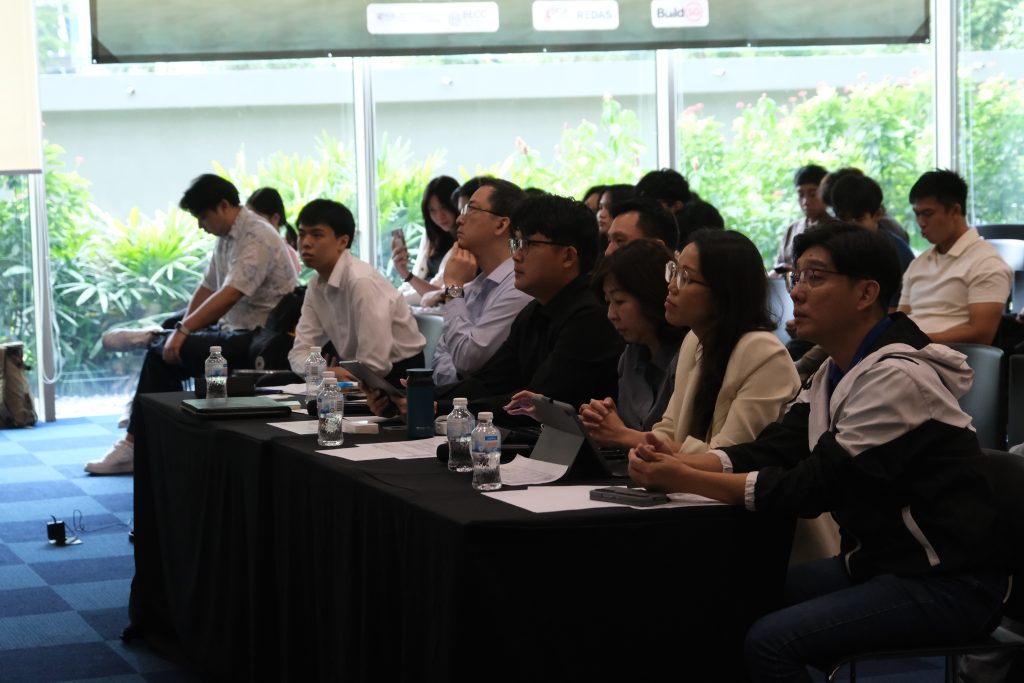
Supported this year by REDAS and BCA, the competition narrowed the field down to six finalists. They pitched before a judging panel of Dr Kevin Kuang (Associate Professor / CEE Representative, NUS), Adrian Seow (Past CEO, BBR Holdings), Toh Ming Tong (Assistant Construction Manager, Obayashi Singapore), Jennifer Loh (Corporate Senior Manager, Digital, Lum Chang Building Contractors), Alan Yeo Hock Kwan (Deputy Project Director, Teambuild Engineering & Construction), and Michelle Chua (Project Management Director, Turner & Townsend).
Here’s a closer look at each solution.
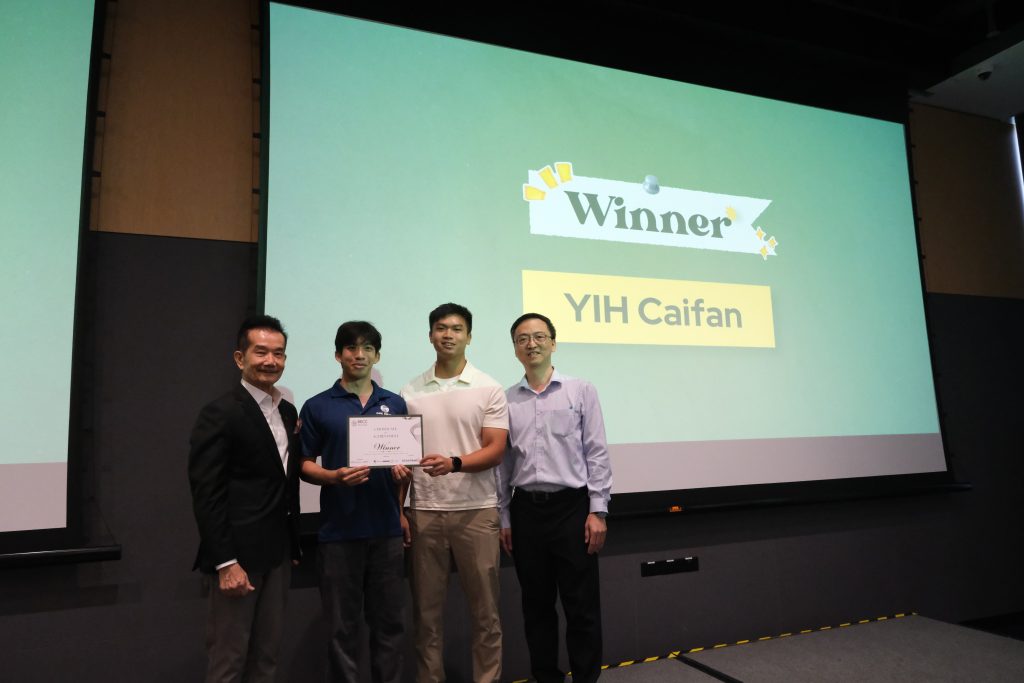
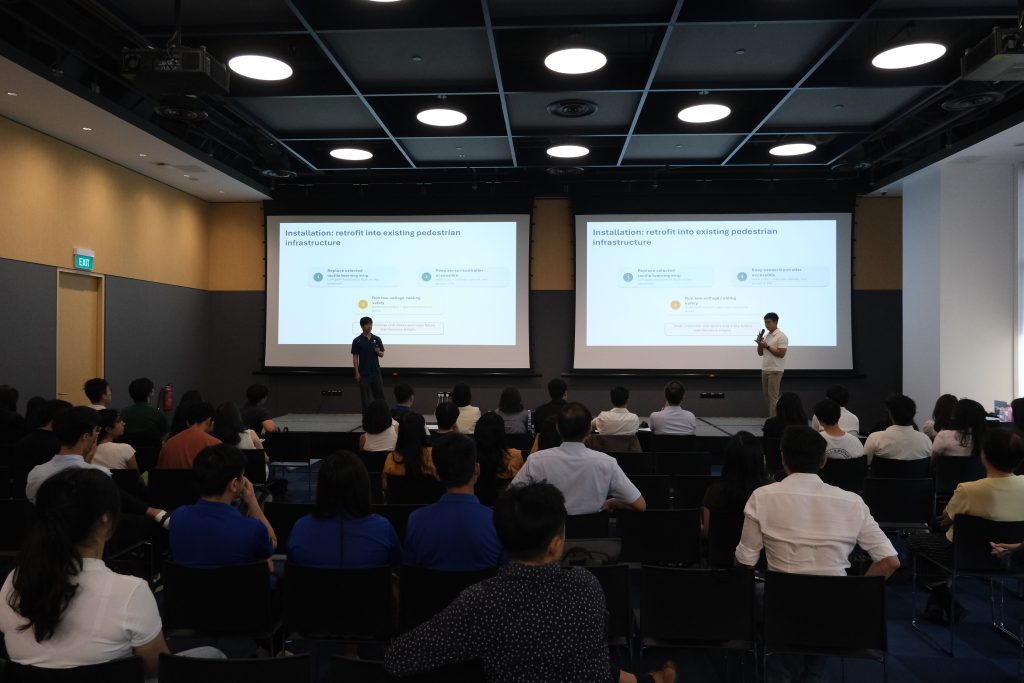
YIH Caifan — Lumipath (Winner)
Team members: Ong Yee Heng, Wong Yijie LucasSchool: National University of Singapore (NUS)
Lumipath tackles a specific, unglamorous problem: unsignalised pedestrian crossings with poor visibility, where turning vehicles and multiple traffic movements make it hard to judge when it’s safe to cross. Roadside sensors track approaching vehicles and pedestrians, and when their paths look like they’ll conflict, ground-level tiles light up red as an extra visual warning — not telling anyone it’s “safe to cross,” just surfacing a hazard they might not see coming. It’s built around the needs of elderly pedestrians, but the team was careful to note it helps children and wheelchair users too. The modular design means the number of sensors and tiles can flex to fit different junction layouts, and it can run off mains power or a standalone solar-battery setup.
Read more about YIH Caifan solution here.
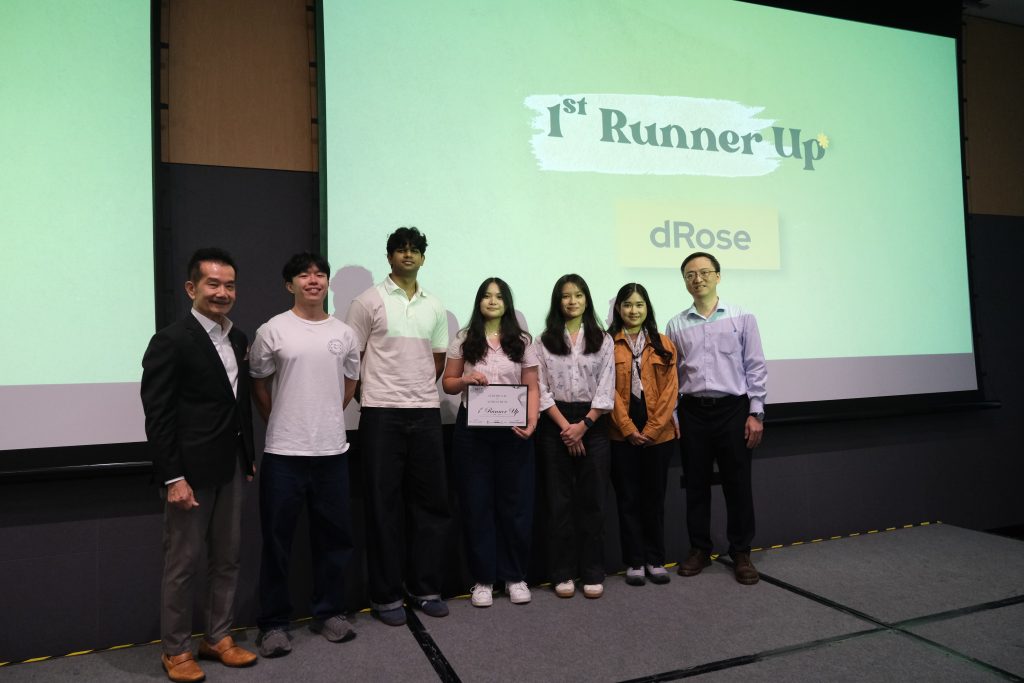
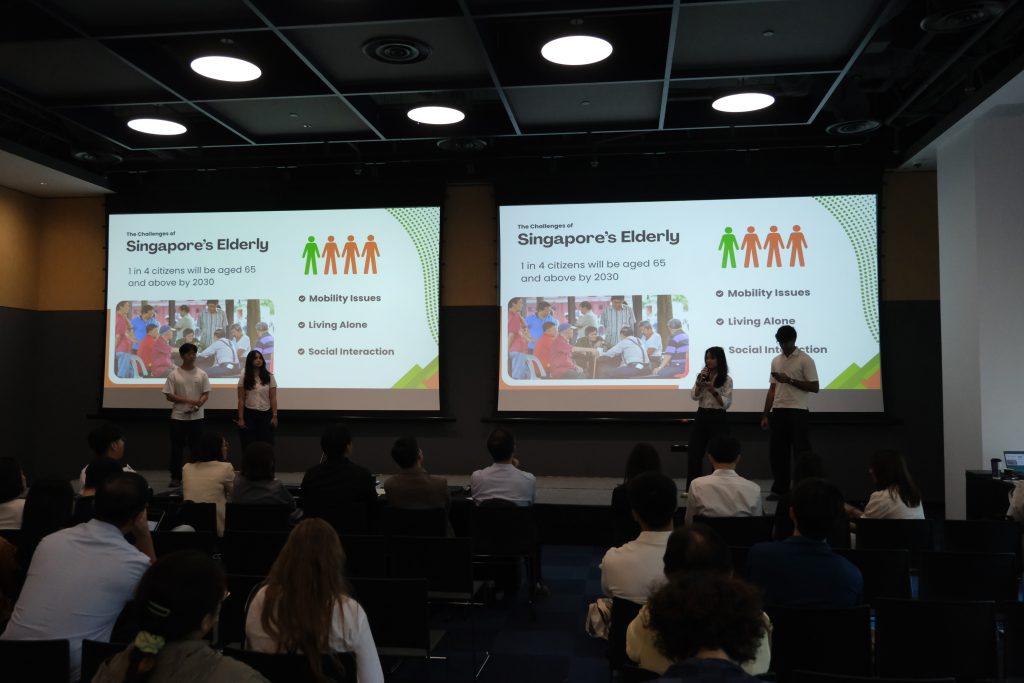
dRose — Living Linkways (1st Runner Up)
Team members: Kate Lovelace Layba Agpaoa, Samuel Chan Guan Xu, Senthilkumar Praveen, Sophia Muhammad Ishak
School: National University of Singapore (NUS)
Singapore has over 400km of sheltered HDB walkways, and dRose’s pitch was that they’re an underused asset hiding in plain sight. Living Linkways retrofits these corridors into age-friendly, community-owned spaces along a single pedestrian route, layering in three things: a passive wayfinding system using projected floor motifs and resident-designed signage (the “Pathways and Paintbrushes” programme), modular vertical planters tended by intergenerational pairs with IoT soil-moisture sensors (“Planter Partners”), and Micro-Plaza Cooling Nodes with smart misting and senior-friendly seating at rest stops. Nothing new gets built — the pitch is entirely about making existing infrastructure work harder for the people who rely on it most.
Read more about dRose solution here.
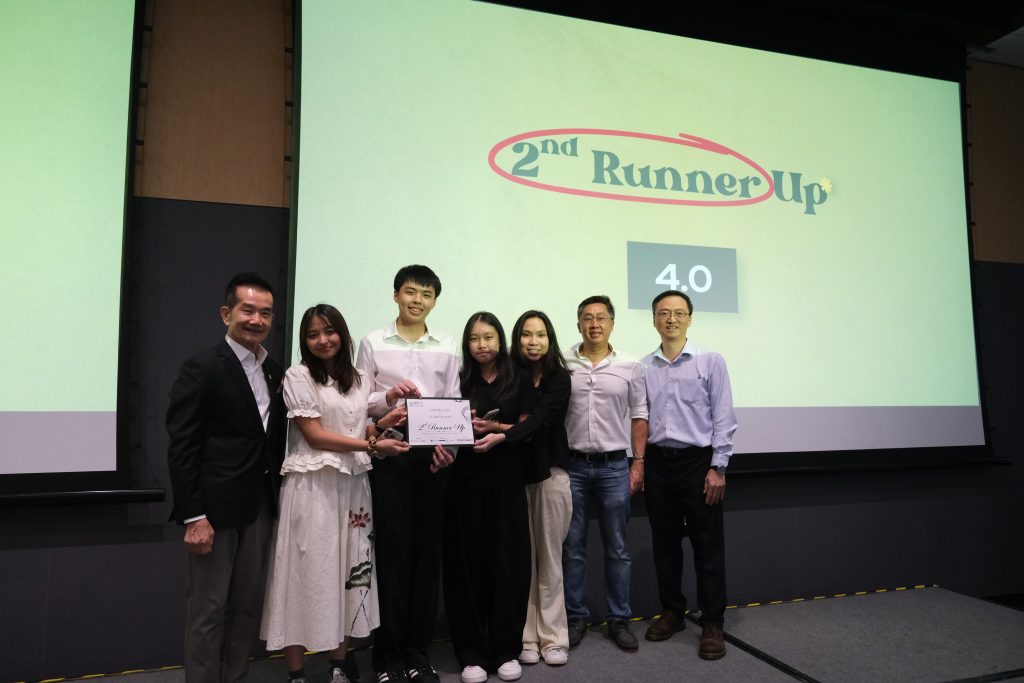
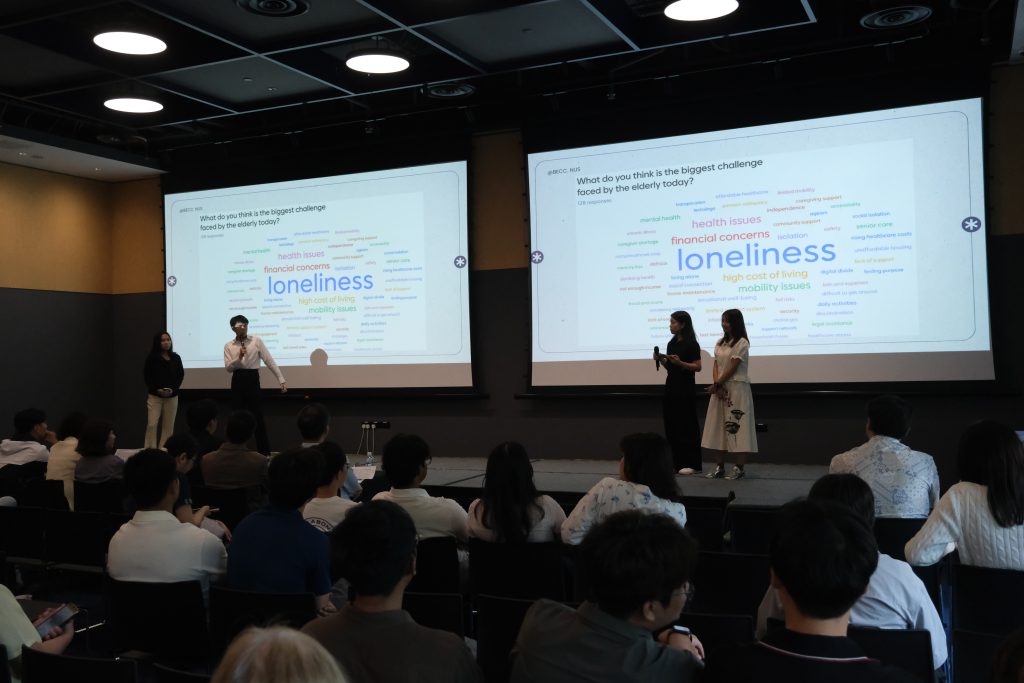
4.0 — Smart HDB Community (2nd Runner Up)
Team members: Darra Lee Yun Qin, Julia Soe Win, Tan Hui Jie, Tan Yu Kai Ralph
School: Singapore Polytechnic
The most tech-dense of the finalist pitches, Team 4.0 reimagined the HDB estate as a connected system: a Smart Predictive Lift with presence detection and priority assistance, a Smart Guidance Handrail Network with tactile, Braille and audio cues for visually impaired residents, and a “Kampong Carer Bot” that handles scheduled check-ins and companionship for elderly residents while looping in human caregivers when needed. Smart cleaning and automated waste collection round out the estate-management side, alongside sensory gardens and intergenerational community spaces. The team’s framing was that the tech should support independent living while keeping Singapore’s “kampong spirit” intact — not replace it.
Read more about 4.0 solution here.
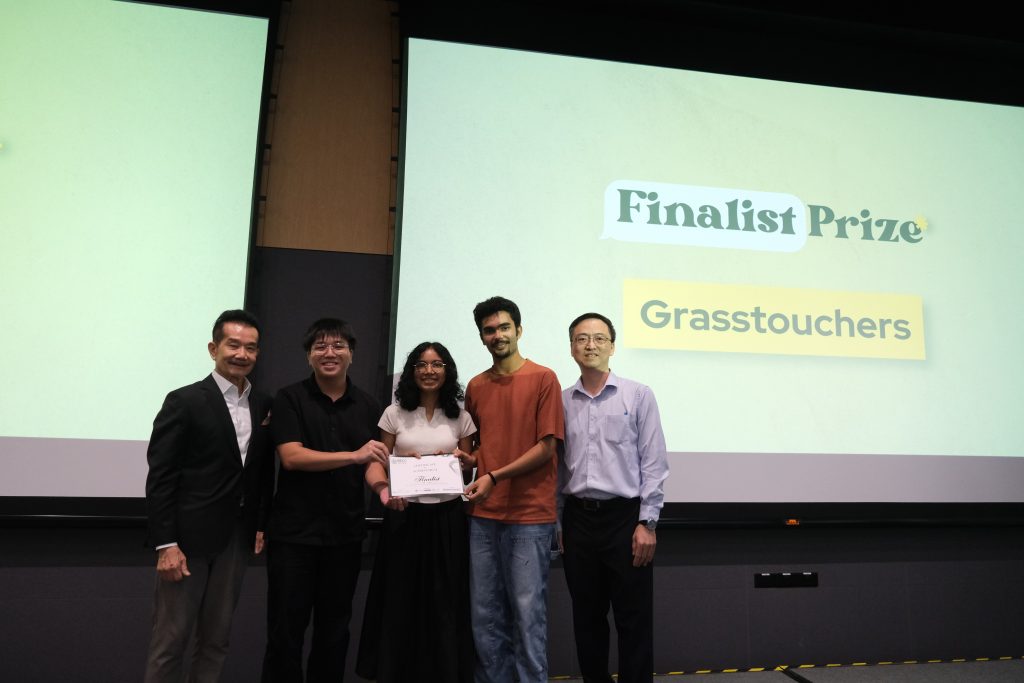
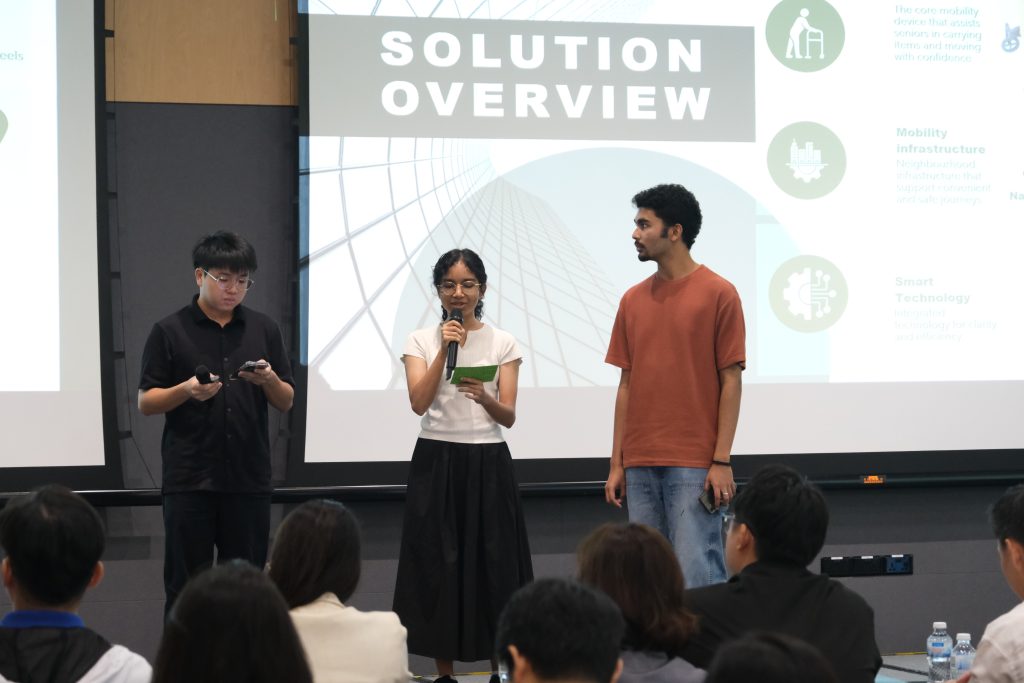
Grasstouchers — SilverMove (Finalist)
Team members: Gabriel Wong Kai En, Hathwar Abhay, Sneha Radhey Shyam
School: National University of Singapore (NUS)
SilverMove starts from a simple observation: the gap between home and daily errands is where a lot of elderly independence breaks down. The team converted refurbished rollators into mobility aids with anti-spill hawker-tray grooves, a low centre-of-gravity trunk for groceries, shock-absorbing wheels and auto-brakes, then paired them with an e-ink screen that gives directional guidance synced to colour-coded trails painted along estate pathways. It runs on a loan model through Active Ageing Centres — seniors attend digital literacy classes and stay active in the community to keep access to a cart, backed by an app and a 24/7 hotline.
Read more about Grasstouchers solution here.
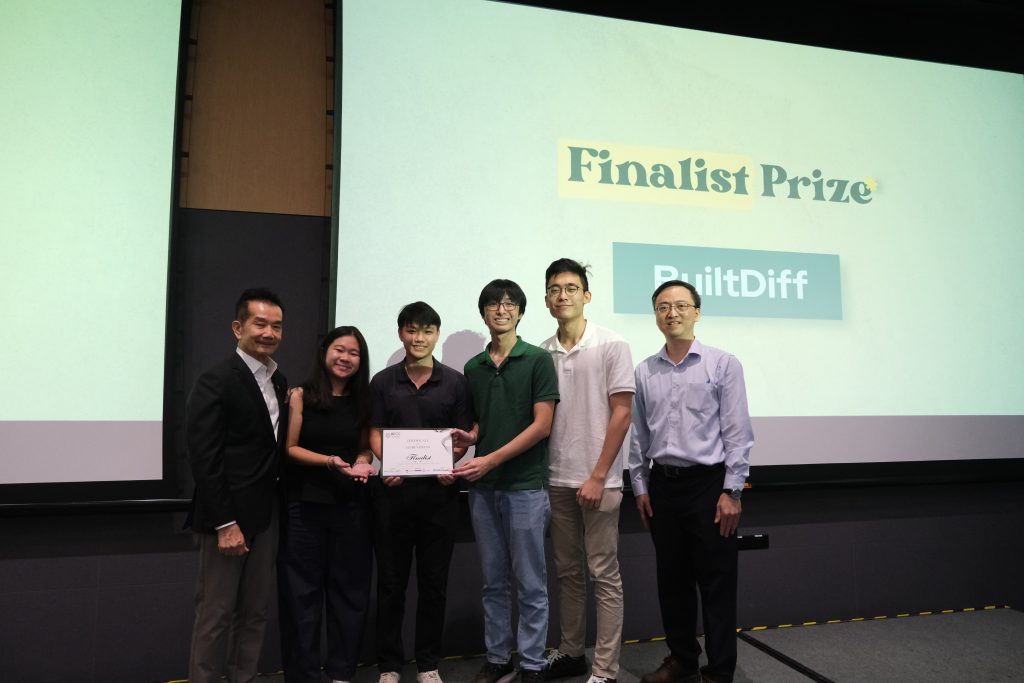
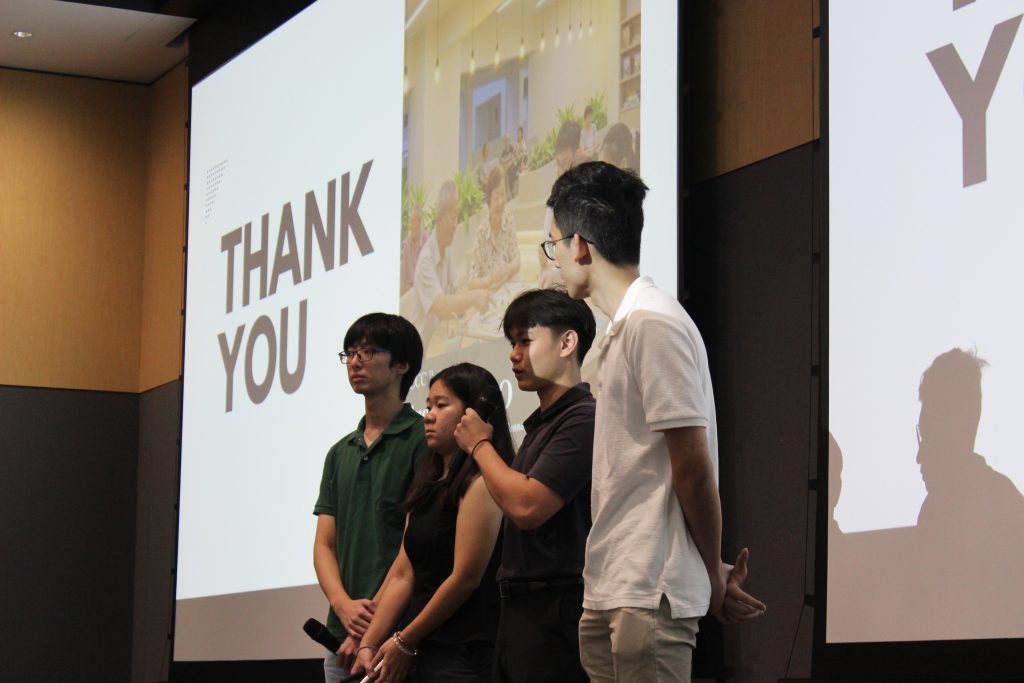
BuiltDiff — Project T.A.O. (Together As One) (Finalist)
Team members: Jolene Wong, Matthew Low Jae Ern, Michael Chiam Jin Yang, Ow Pei An Dillon
School: National University of Singapore (NUS)
BuiltDiff’s pitch goes beyond care and into economic agency. Project T.A.O. retrofits void decks and vacant rental units in elderly-dense estates like Bedok, Toa Payoh and Bukit Merah into communal lounges and studios, then layers in structured programming — life skills and income-generating courses delivered through partnerships with ITE, SkillsFuture and the Agency for Integrated Care. The centrepiece is a resident job board that matches neighbours who need help with those trained to provide it, effectively building a local gig economy that keeps both money and social contact within the estate.
Read more about BuiltDiff solution here.
Congratulations to all the finalists, and to Team YIH Caifan for taking the top spot with Lumipath. REDAS is proud to support BECC 2026 this year, and looks forward to seeing where this next generation takes the industry.