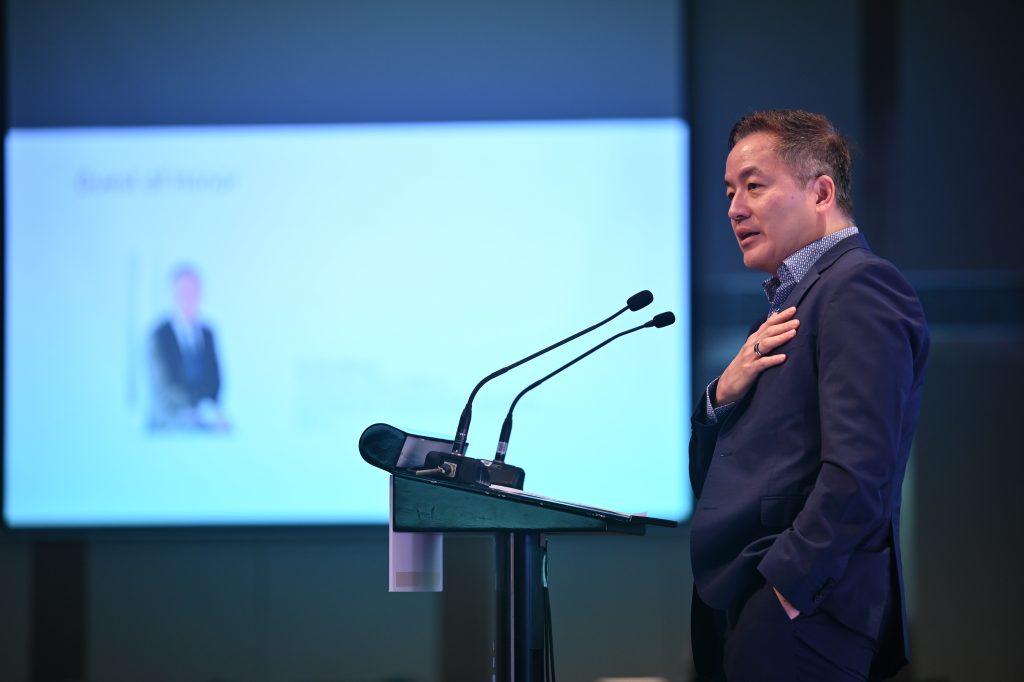
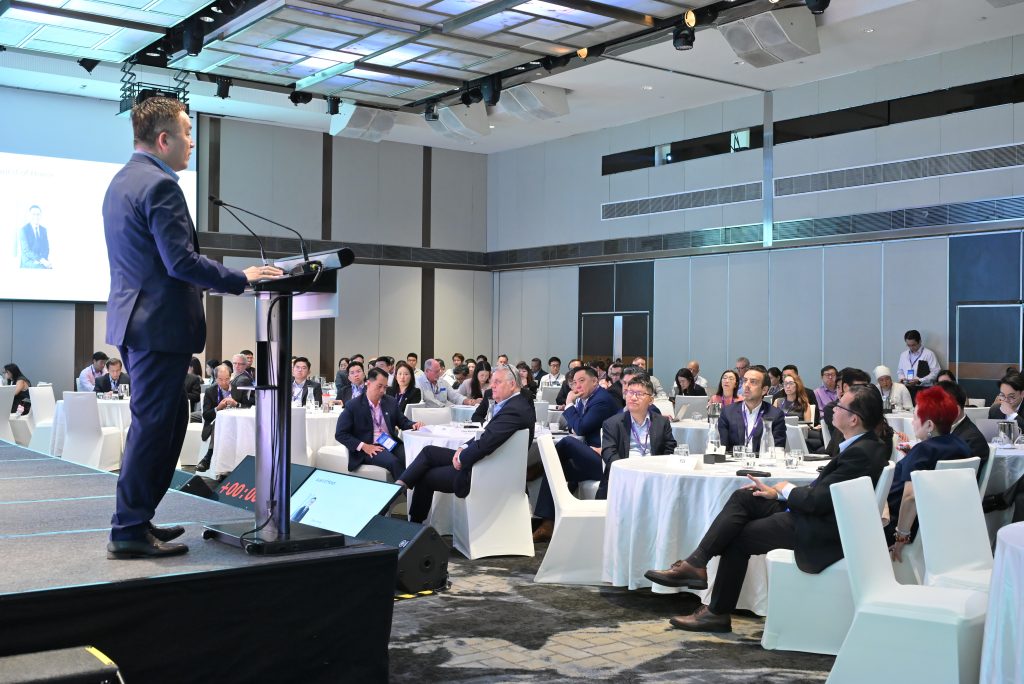
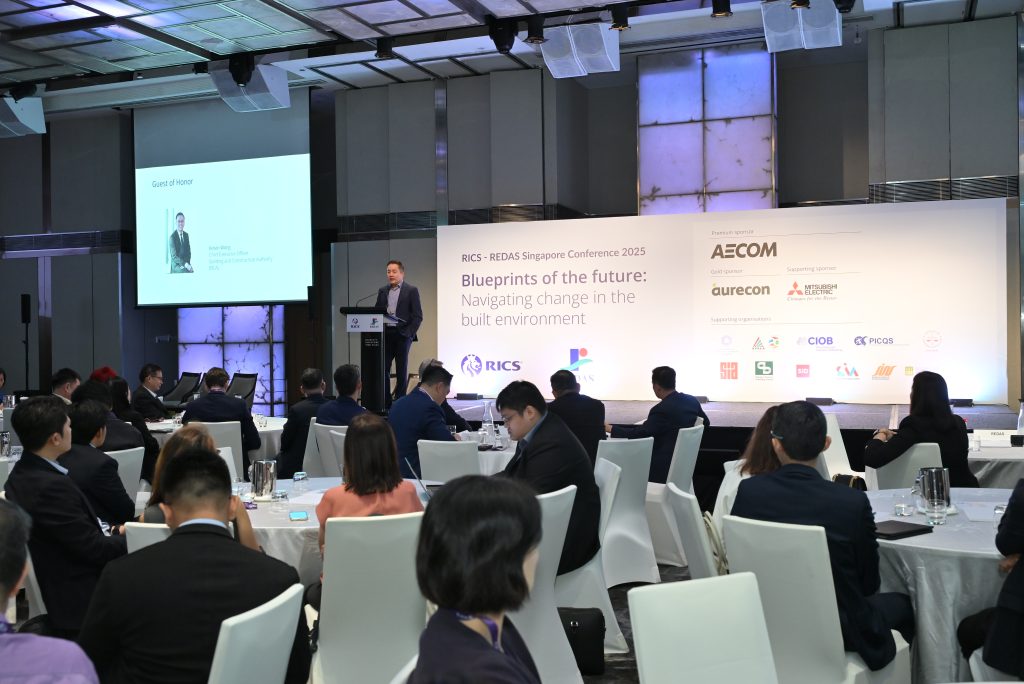
In his keynote address at the RICS REDAS Conference 2025 on 16 October, themed “Blueprints of the Future: Navigating Change in the Built Environment,” Mr Kelvin Wong, CEO of the Building and Construction Authority (BCA), called on the industry to strengthen its resilience through foresight, collaboration and innovation.
Planning for an Uncertain Future
Mr Wong highlighted that the sector faces deep structural shifts, namely an ageing population, a shrinking workforce, climate change and ageing infrastructure. These trends will shape demand, design and delivery in the years ahead.
He stressed the value of scenario planning to test if current strategies can withstand both the best and worst conditions. Post-pandemic volatility in construction costs showed how over-estimating risk can raise prices and limit flexibility. Firms need to embed adaptive frameworks in contracts and procurement models so they can pivot when the market turns.
Collaboration as a Competitive Advantage
Mr Wong encouraged stronger partnerships across all stages of a project to reduce waste and improve efficiency. BCA’s CORENET X and push for early contractor involvement create upstream visibility that prevents rework and improves delivery outcomes.
He noted that collaboration should also extend to facilities management, where new contracting models promote shared incentives, long-term maintenance value and continuous improvement.
Innovation and Workplace Culture
BCA has seen the deployment of more than 20 robotic solutions across 60 projects in the past 12 to 18 months. In response to an ageing workforce, integrating APIs in lifts and building systems enables robots to take on some of the manual labour.
Beyond technology, Mr Wong highlighted the BE CARE Charter, which fosters respect, empathy and better communication at worksites — a culture shift critical for talent retention and teamwork.
What This Means for the Industry
Scenario planning supports better risk assessment and capital decisions. Collaboration with contractors, consultants and facilities management teams strengthens cost control and delivery. Innovation, from robotics to digital workflows, enhances productivity and sustainability outcomes.
Most importantly, his call reinforces that resilience is now a shared responsibility across the ecosystem. Developers, regulators, and service partners must work together to build assets that are not only functional but also adaptable, safe and future ready.
As a thought leader and advocate, REDAS will continue to serve as a bridge between industry and government; driving dialogue, sharing insights, and fostering partnerships that shape a resilient and forward-looking built environment for Singapore.
More About the Rics-redas conference 2025