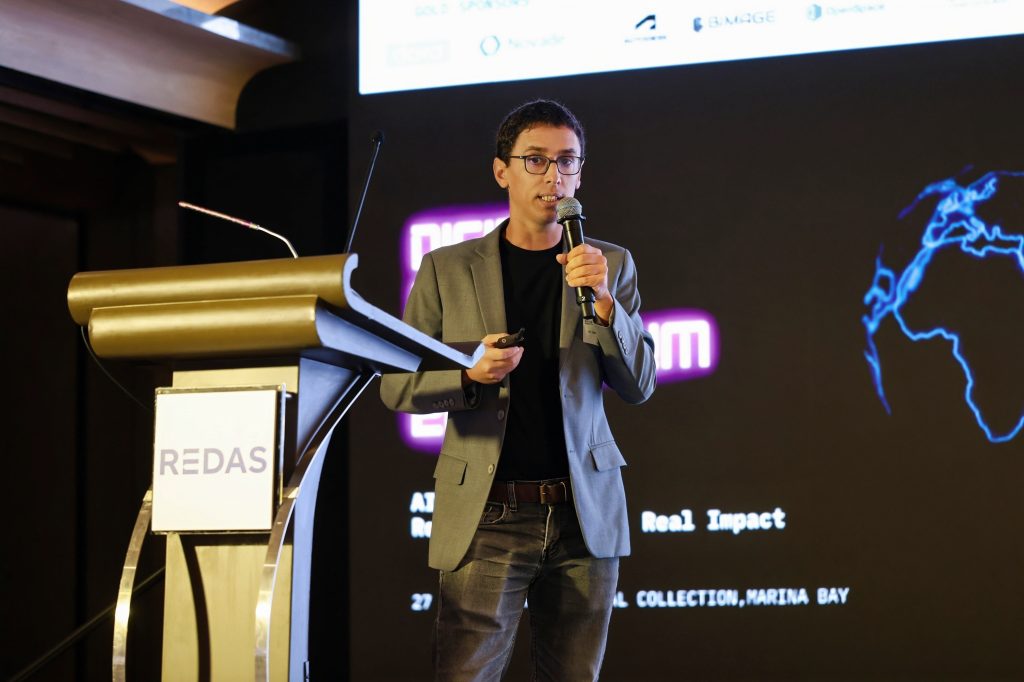
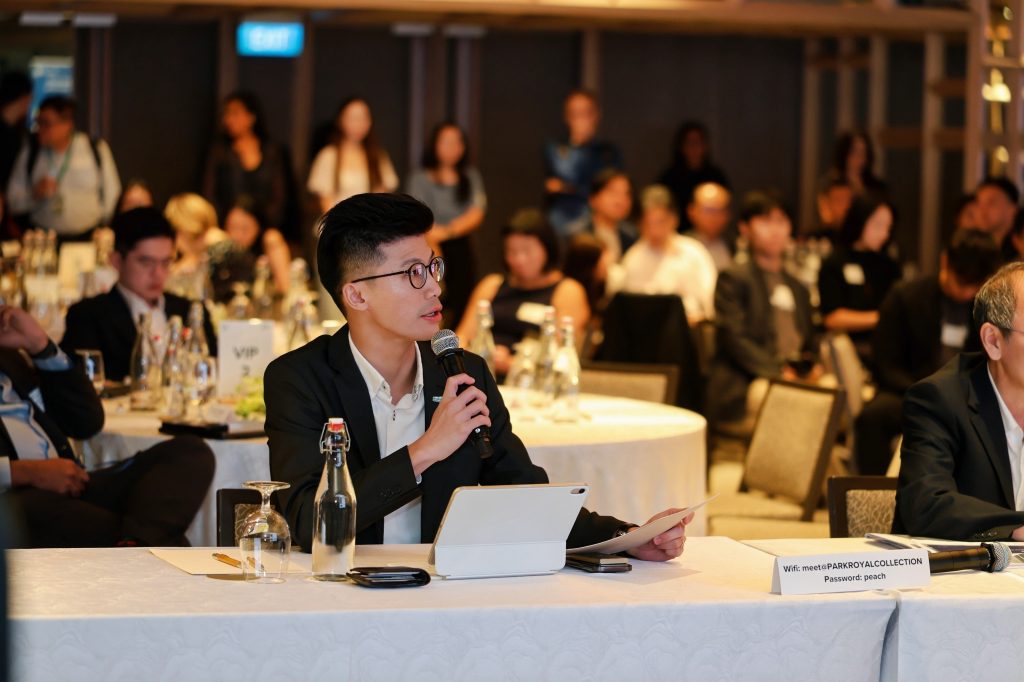
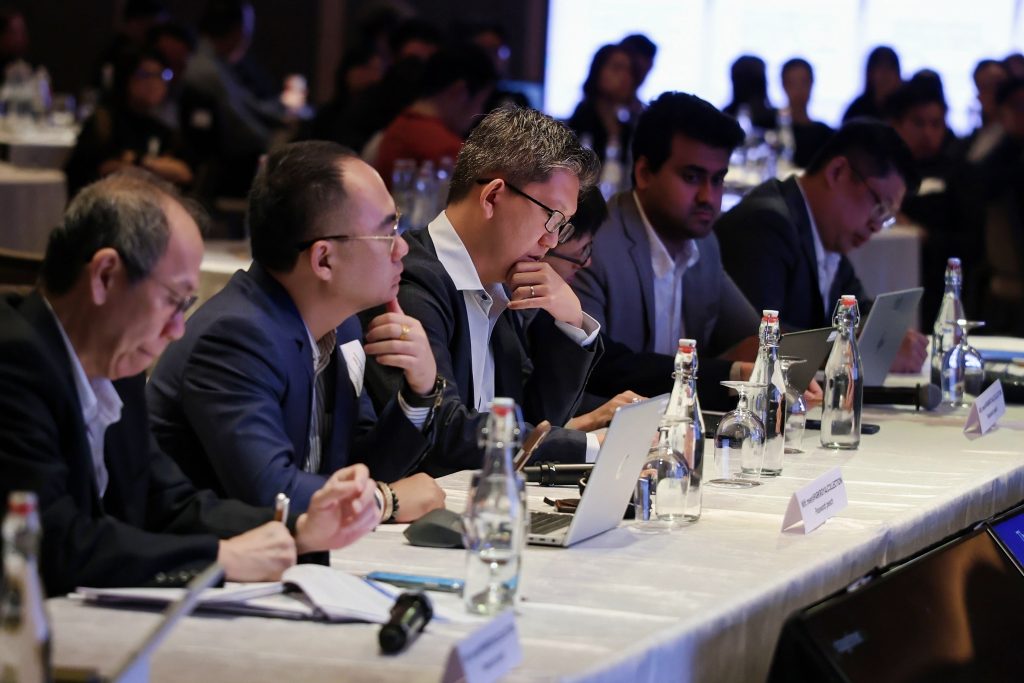
27 August 2026 – The REDAS Digital Future Symposium 2026 brought together around 270 developers, technologists and industry leaders at PARKROYAL COLLECTION Marina Bay to examine how artificial intelligence is reshaping Singapore’s property sector, from project management and safety to procurement and portfolio strategy.
The symposium also marked a first for REDAS: the unveiling of the finalists from the inaugural REDAS Innovation Challenge 2026, a competition inviting innovators to solve real problems submitted directly by developers, including project management bottlenecks, cost pressures, and workflow inefficiencies.
Welcome Address
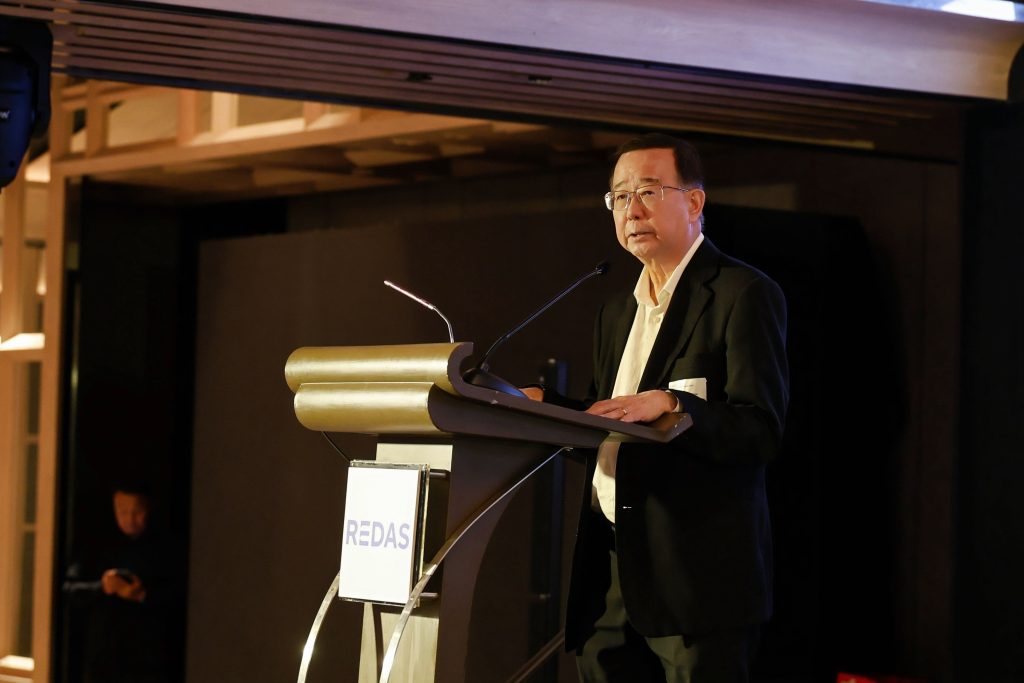
The symposium opened with a welcome address by REDAS President Mr Tan Swee Yiow, Chairman of Keppel REIT Management. He noted Singapore has adopted generative AI faster than most countries, and said its impact on real estate will extend beyond productivity, shaping what gets built, how it gets built, and how the industry operates. He framed the day around a simple idea: start with real problems, not the technology.
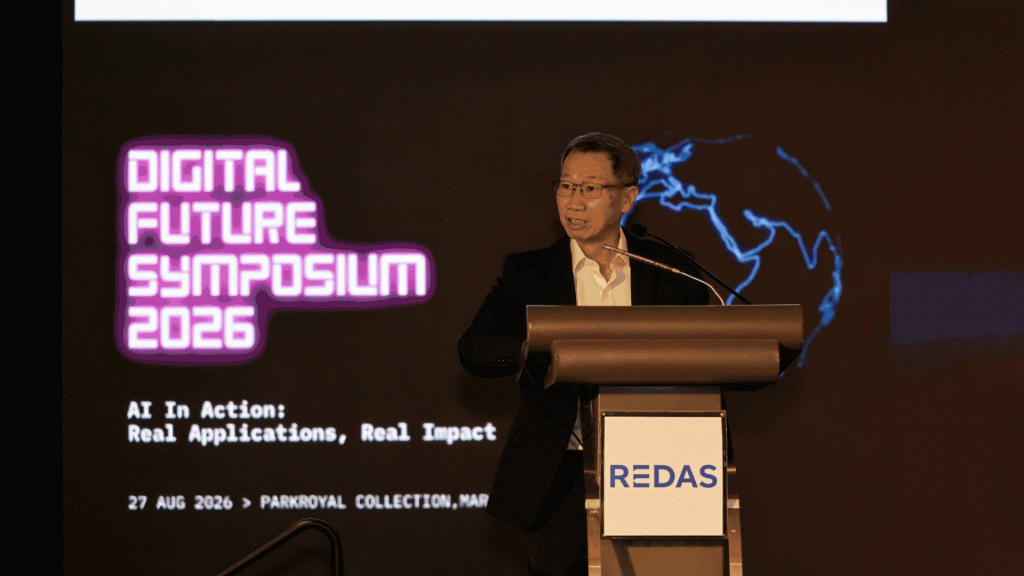
Opening Address
Guest-of-Honour Mr Tan Kiat How, Senior Minister of State for the Ministry of Digital Development and Information & the Ministry of Health, delivered the opening address. He said the harder part of AI transformation is rarely the technology itself, but changing the processes and people around it, and that AI should augment professional judgment rather than replace it. He offered three principles for turning AI into business value: start with the problem, close the gap between leadership ambition and ground-level reality, and bring employees along. He closed by urging developers to use procurement and partnerships to shape the right incentives, and to help what works scale across the industry.
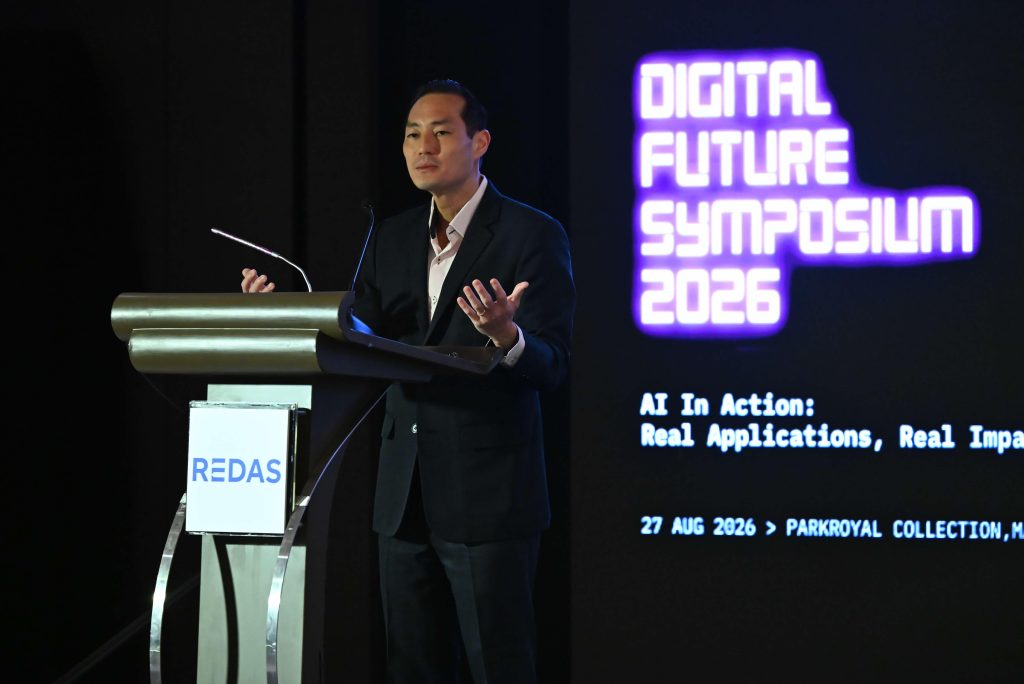
Keynote Address
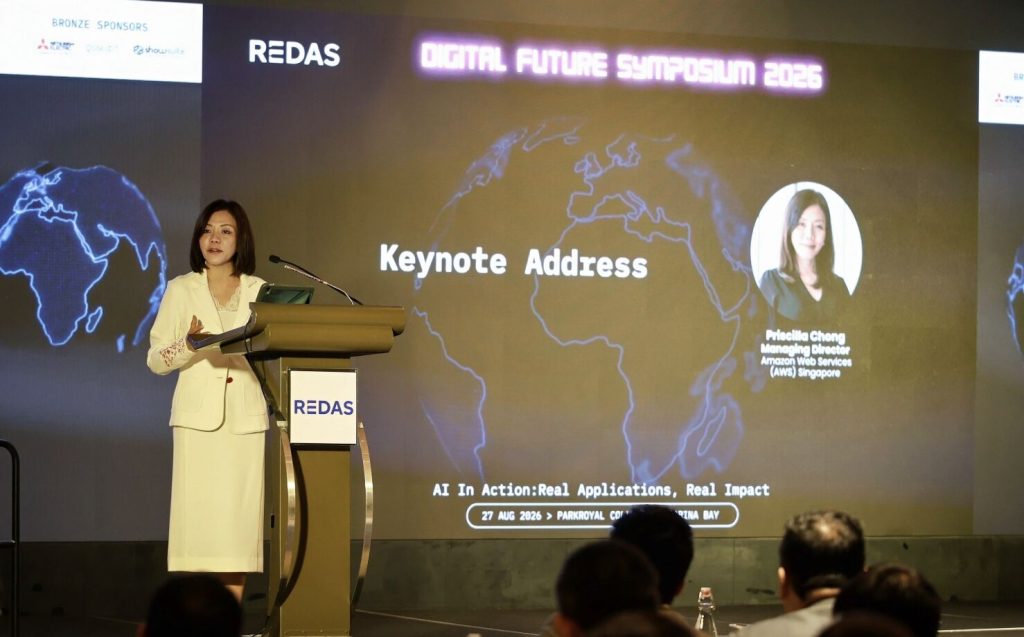
The morning’s keynote, Real Problems, Real Solutions: How AI is Transforming Property Development, was delivered by Ms Priscilla Chong, Managing Director of Amazon Web Services Singapore. She said the industry conversation has shifted from experimenting with AI to scaling it, with organisational readiness now the bigger challenge than the technology. She named three recurring pain points, defect-driven rework, fragmented regulatory compliance, and no single source of truth for project data, and framed the Innovation Challenge finalists as proof AI is already solving them in production. She pointed to Singapore’s AI governance framework and AWS’s continued investment as reasons the conditions for adoption have never been stronger.
REDAS Innovation Challenge
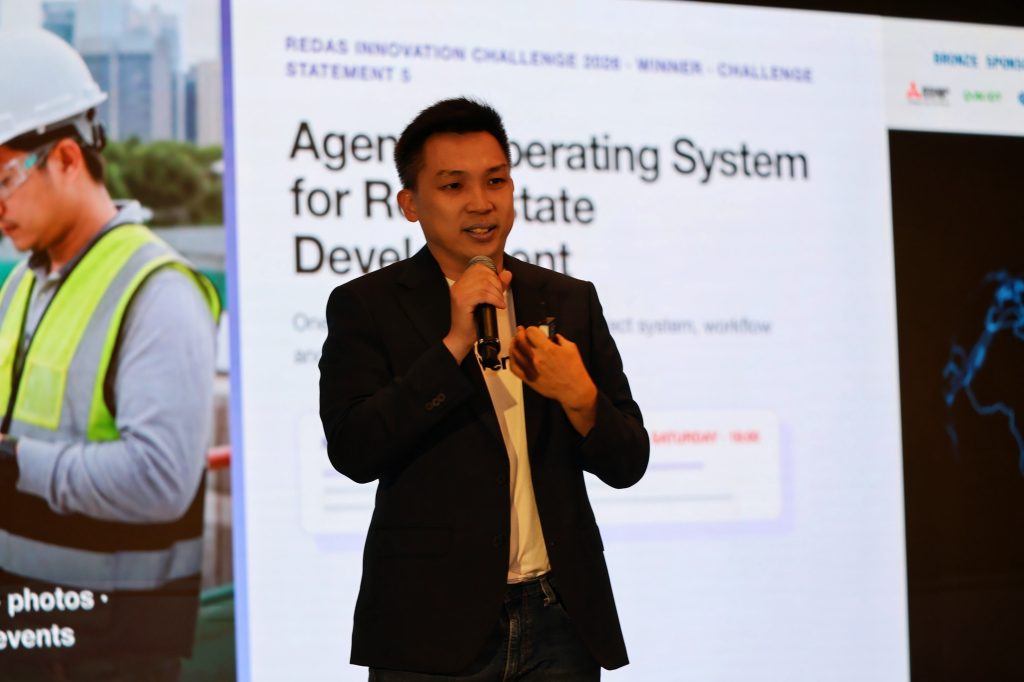
After a three-month innovation journey, three finalists emerged from the inaugural REDAS Innovation Challenge, H3 Zoom, Novade Solutions and Wenti Labs, selected from 11 pitches submitted across three challenge statements. The finalists were chosen for tackling some of the industry’s most persistent problems, including project management bottlenecks, cost overruns and workflow inefficiencies, and each team presented their solution live on stage at the symposium. Attendees also got to cast their own vote for the overall winner, giving the industry a direct say in the outcome alongside the judging panel.
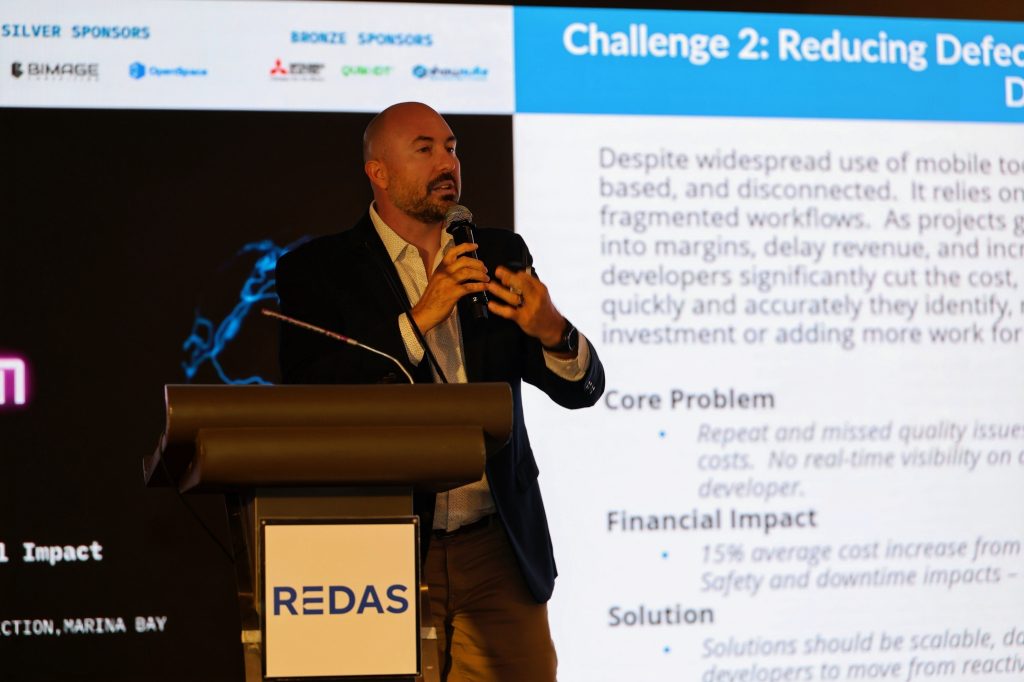
Challenge Statement 1: Reducing Defect Costs.
Defect management today is heavily manual, photo-based and disconnected, relying on human judgment and duplicate data entry. Novade Solutions presented an AI system that detects defect types from site photos with over 90% accuracy, classifying, predicting and verifying rectification. Judges praised its responsiveness to feedback and said it aspires to become an industry benchmark for quality. As Novade’s Senior Director, Ben Shanks, put it, “Being productive doesn’t mean always being on your phone.”
Challenge Statement 2: AI Regulatory Engine.
Manual compliance checks against BCA, URA and SCDF requirements rely on fragmented PDFs and circulars, causing delays and rework. H3 Zoom presented an AI co-pilot that reads architectural plans alongside building codes and returns source-linked compliance recommendations, an auditable second pair of eyes for the QP. Judges pointed to a strong end-to-end workflow demonstration. Dr Jaime Rubio Hervas, VP of R&D at H3 Zoom summed it up as “building by proof, backed by evidence from the cloud.”
Challenge Statement 3: Unified Data & Reporting.
Project requirements and profitability targets are scattered across emails, chats, files and spreadsheets. Wenti Labs presented AI agents that sit on top of a developer’s existing platforms to extract, track and enforce accountability without changing existing workflows. Judges highlighted its longer-term potential as a semantic layer, not just a connector. As Co-Founder of Wenti Labs, Ethan Ow, put it, “Property developers do not lack reports. They lack reliable first mile data.”
Judges noted that all three finalists came well prepared, with products highly applicable to improving productivity and quality across the development process, and that the key differentiator among them lay in the depth and impact of their respective applications.
The judging panel comprised Mr Arnold Leong (Senior Manager, BCA’s Built Environment Technology Alliance), Mr Brandon Tham (Senior Development Manager, CHEC Urban Development), Ms Loh Yi Huang (Senior Project Manager, Wing Tai Property Management), Mr Ngo Wei Quan (MD, PM Link), Mr Sandesh Menon (Head of Greenfield, ASEAN, Amazon Web Services), Mr Desmond Sim (Group CEO, Realion; Honorary Advisor, REDAS) and Mr Toh Kim Sai (Head of Development Management, IOI Properties).
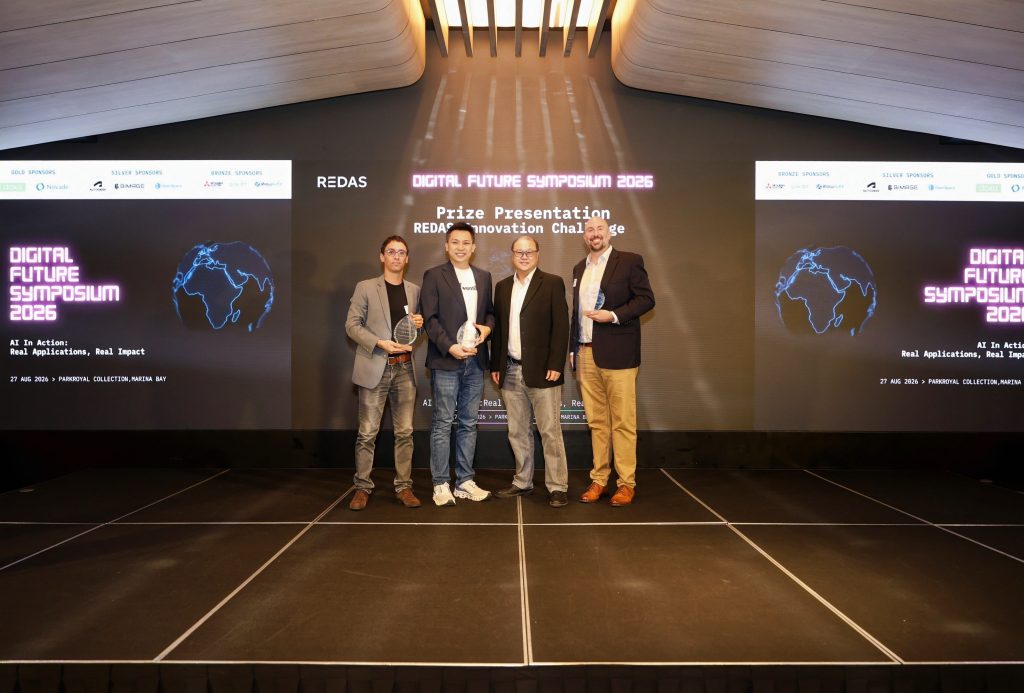
The Challenge produced three winners, one per statement: Wenti Labs was named Overall Winner of the inaugural REDAS Innovation Challenge 2026, with Novade Solutions as First Runner-Up and H3 Zoom as Second Runner-Up.
Data as the New Frontier
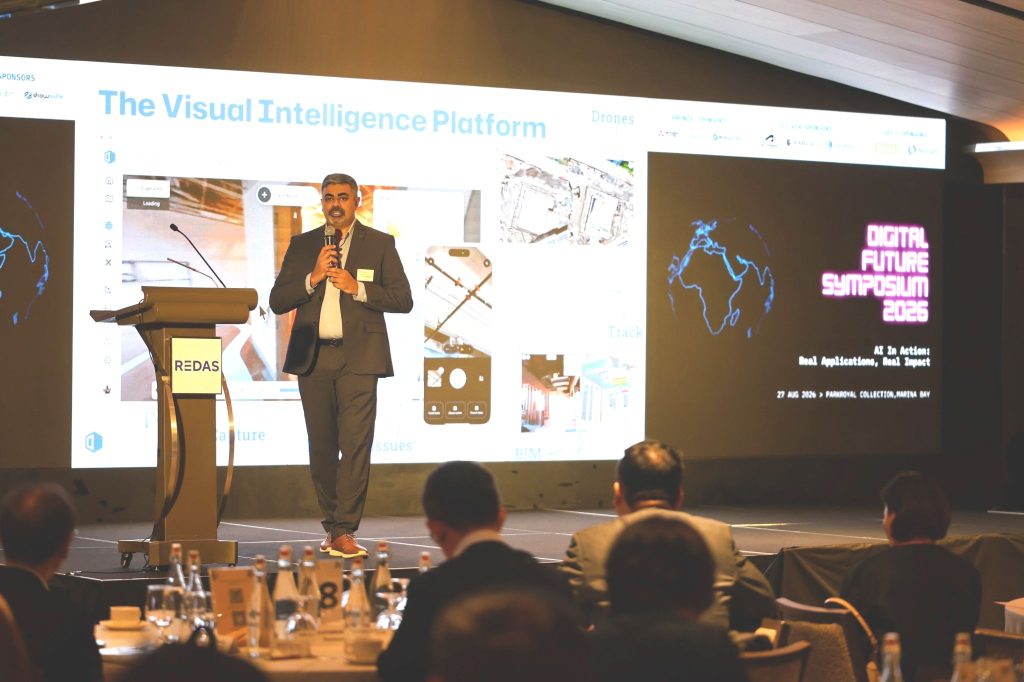
After the morning break, Mr Tomy Praveen, Managing Director APJ at OpenSpace, argued that as AI agents become capable of handling the workflows built into today’s project management platforms, the real competitive advantage will shift to something harder to copy: the proprietary data developers already hold. Drawing on case studies, he outlined what this shift looks like in practice for developers juggling regulation, contractors and tight timelines.
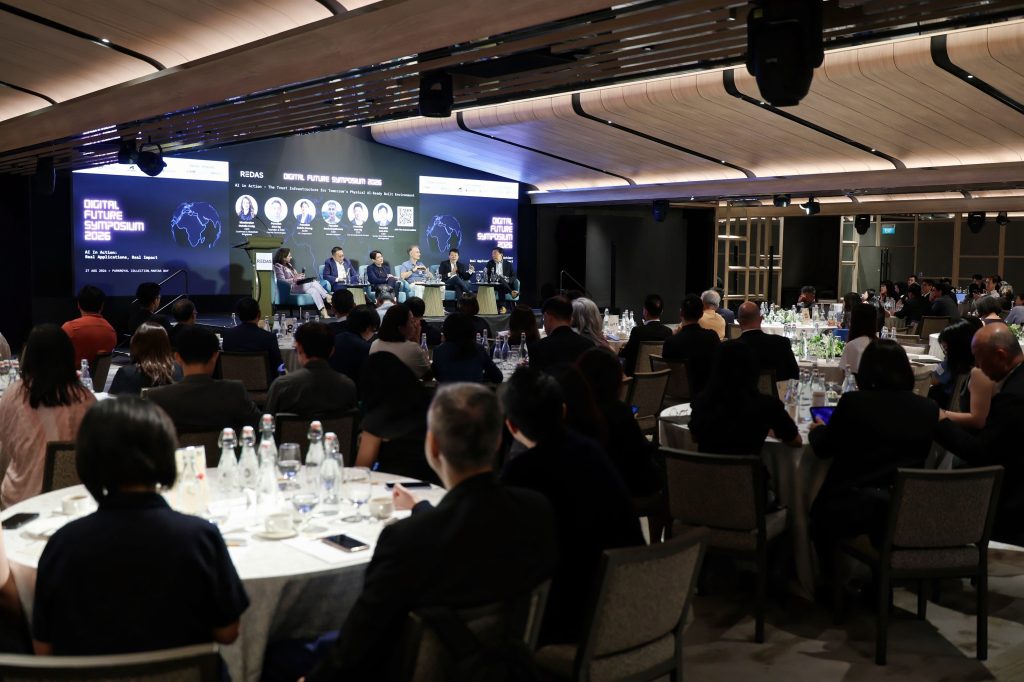
This was followed by the panel discussion AI in Action: The Trust Infrastructure for Tomorrow’s Physical AI-Ready Built Environment, moderated by Ms Natalie Craig, CEO of Cushman & Wakefield Singapore. Panellists Mr Alan Ng (Founder and CEO, Quikbot Technologies), Mr Calvin Chung (Assistant CEO, JTC Corporation), Mr Denis Branthonne (Co-Founder and CEO, Novade), Mr Ivan Koh (CEO, Suntec Real Estate Management Services) and Mr Ivan Ng (CTO, City Developments Limited) discussed how estate owners can connect, orchestrate, govern and record autonomous activity as Physical AI systems move beyond pilots, and what capabilities owners will need in place over the next three to five years to retain control as autonomy scales.
From Insights to Action
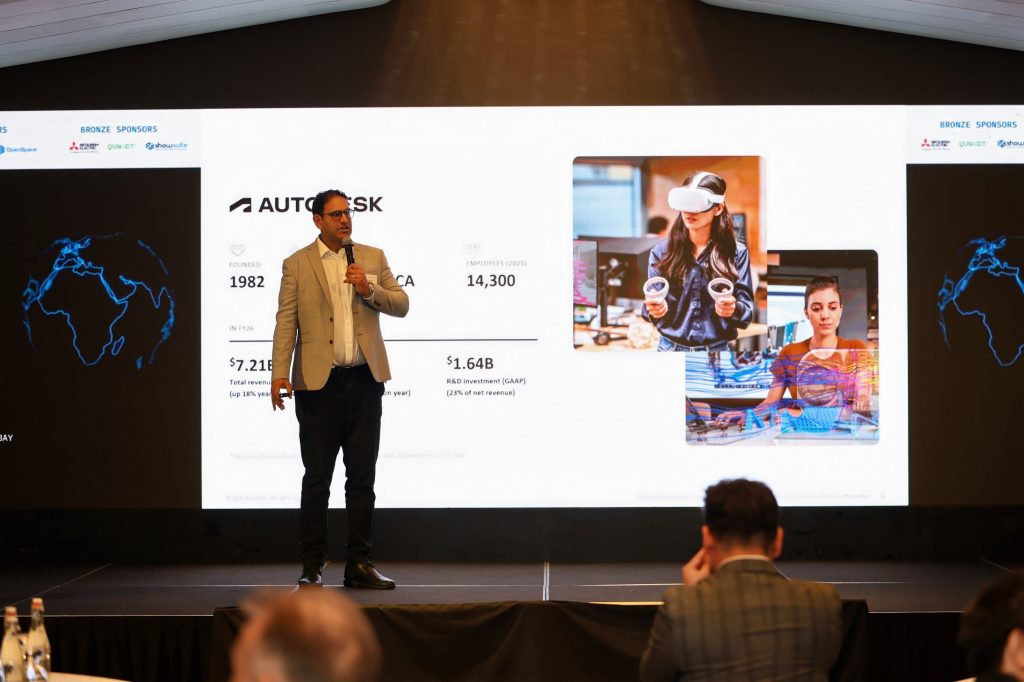
Mr Sumit Oberoi, Senior Manager for Construction Strategy & Partnerships (Asia Pacific) at Autodesk Construction Solutions, spoke on how connected platforms allow AI to bring together project, asset and operational data, helping owners move from reactive management to predictive operations, reduce rework and delays, and better protect long-term portfolio value.
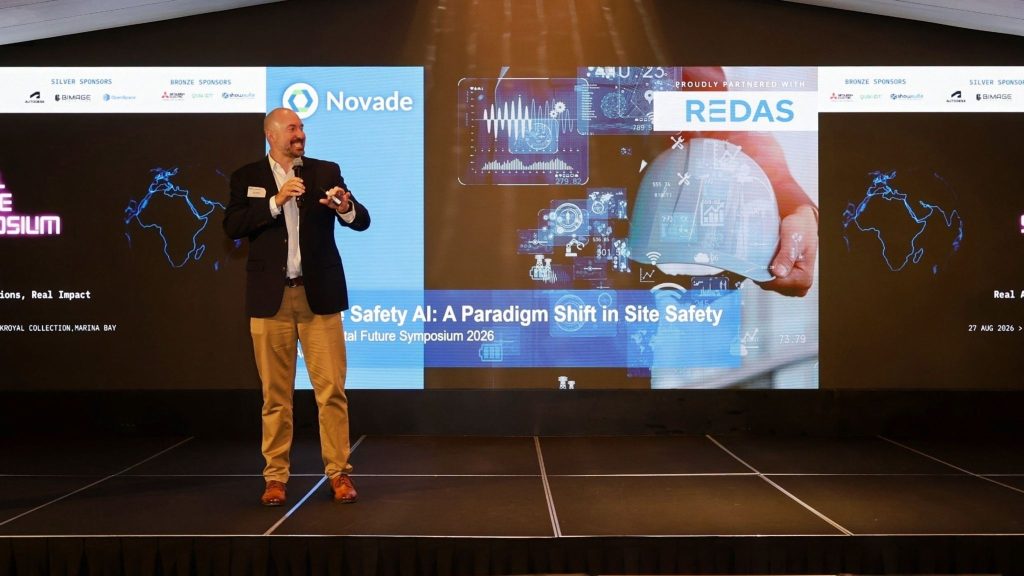
Mr Ben Shanks, Senior Director at Novade Solutions, followed with a session on predictive safety management, sharing how Singapore organisations are using historical and real-time site data to flag behaviour changes and predict risks with over 80% accuracy, moving safety management from reactive to preventive.
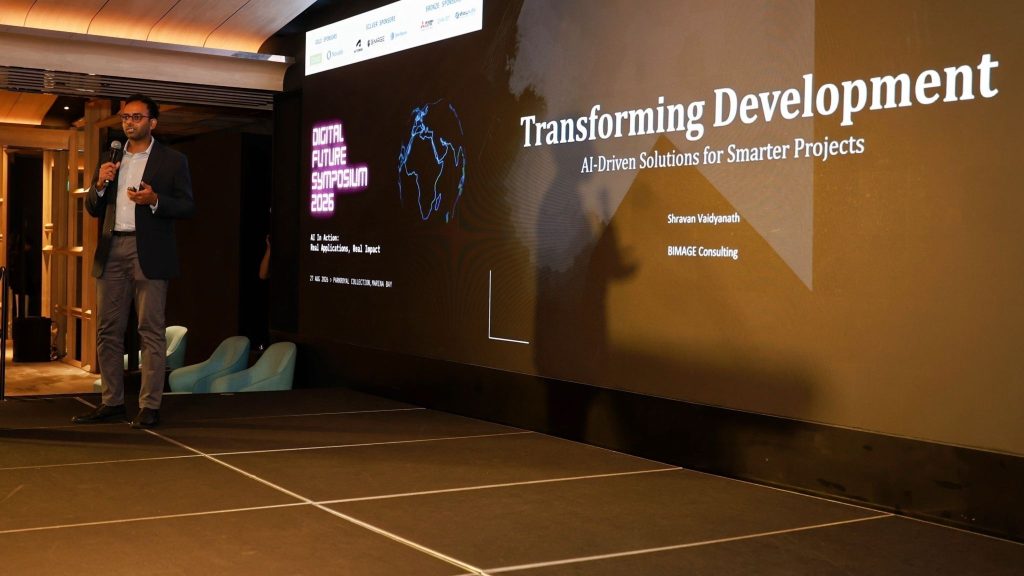
Mr Shravan Vaidyanath, Chief of Staff at BIMAGE Consulting, closed out the early afternoon with a look at how AI-powered platform services are reshaping the land-to-launch journey, from early planning through to operational readiness.
Procurement, Governance and What Comes Next
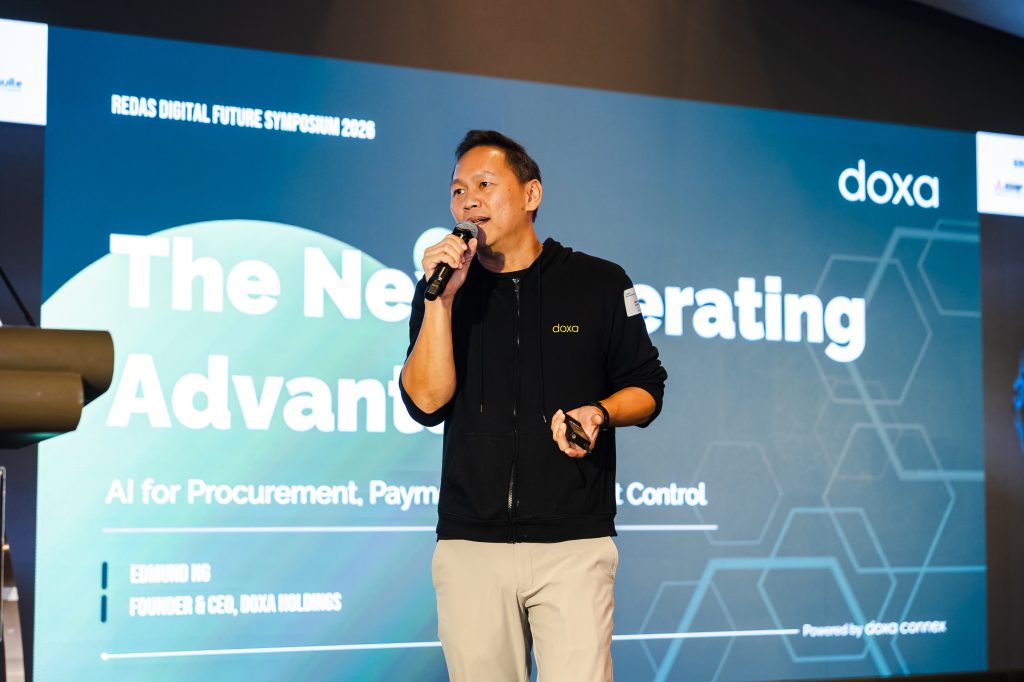
After the afternoon break, Mr Edmund Ng, Founder & CEO of Doxa Holdings, examined how AI is reshaping commercial risk management at scale, through real-time portfolio reporting, AI-assisted querying of live commercial data, and continuous anomaly detection across procurement and payment.
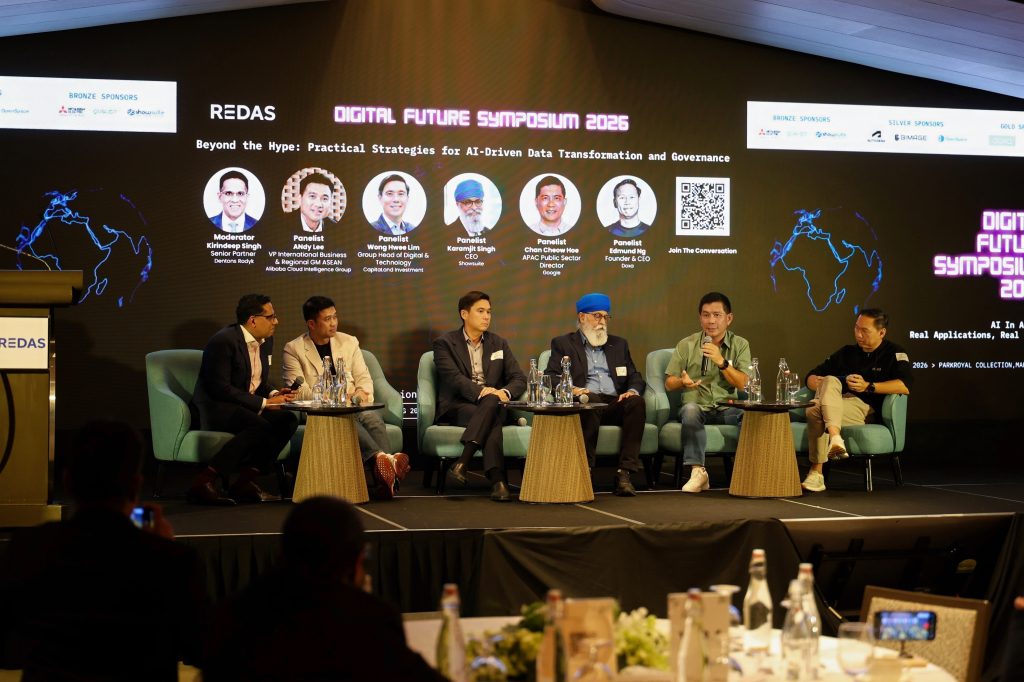
The day closed with the panel Beyond the Hype: Practical Strategies for AI-Driven Data Transformation and Governance, moderated by Mr Kirindeep Singh, Senior Partner at Dentons Rodyk. Panellists Mr ANdy Lee (VP International Business and Regional GM ASEAN, Alibaba Cloud Intelligence Group), Mr Wong Hwee Lim (Group Head of Digital and Technology, CapitaLand Investment), Mr Edmund Ng (Doxa Holdings), Mr Chan Cheow Hoe (Director, APAC Public Sector, Google) and Mr Karamjit Singh (CEO, Showsuite) discussed why adopting AI technology is the easy part, and why most implementations stall not because of the tools themselves, but because of the data infrastructure, governance frameworks, and people and processes around them.
Closing Reflections
Professor Alex Siow, Senior Executive Education Fellow at the NUS School of Computing, delivered the closing remarks, drawing the day’s sessions together and reflecting on what developers should prioritise as they move from experimenting with AI to applying it at scale.
The symposium offered a clear-eyed look at where AI is already delivering measurable value across Singapore’s property sector, and where developers still need to build the data, governance and organisational foundations to capture it. AI is already applicable today, not a distant promise, and Singapore’s unusually well-documented development control parameters give it a real head start, provided agencies shift from manual checking to AI-assisted review, much as AI has taken over routine work in radiology without replacing radiologists. The urgency is real too: safety and delivery problems rarely surface overnight, so AI’s biggest value lies in catching issues early, not just efficiency gains, starting small, with clean data and clear processes, before layering on AI.
The Innovation Challenge itself circled back to the same idea Mr Tan Swee Yiow and Mr Tan Kiat How had opened the day with: start with the problem, not the technology. Wenti Labs’ winning pitch put that principle into practice, built around a simple observation from its founder: developers don’t lack reports, they lack reliable first-mile data.
REDAS thanks our sponsors, speakers and delegates for making our Digital Future Symposium 2026 a success.
Read what the media has to say:
The Edge Singapore | Property developers can be AI ‘market shapers’, says Tan Kiat How