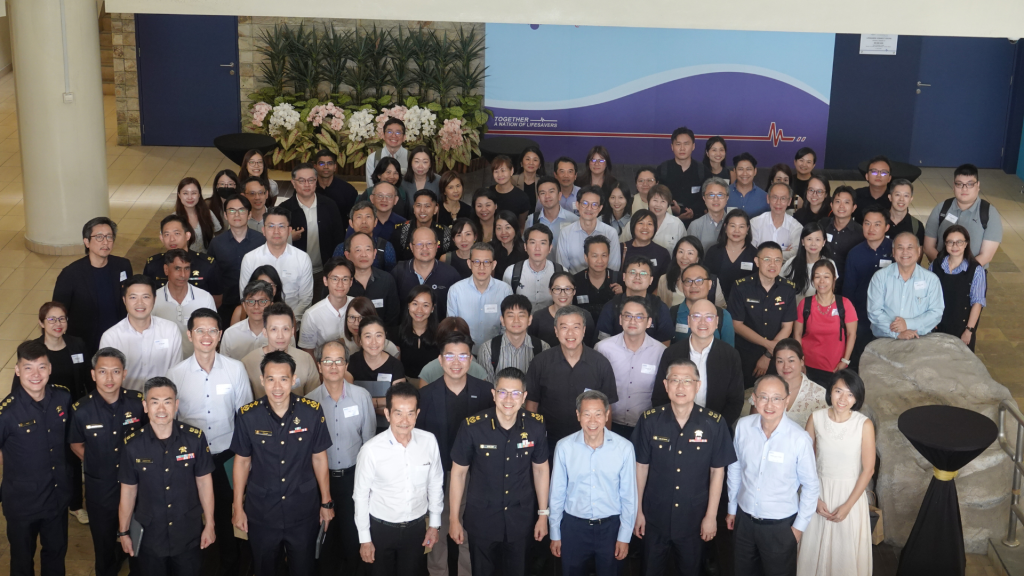
21 October 2026 – REDAS held its inaugural AEI Forum 2026 at 4th SCDF Division HQ, bringing together approximately 120 participants, including regulators, policymakers and industry professionals, to exchange insights, address regulatory challenges and explore practical approaches to Asset Enhancement Initiatives
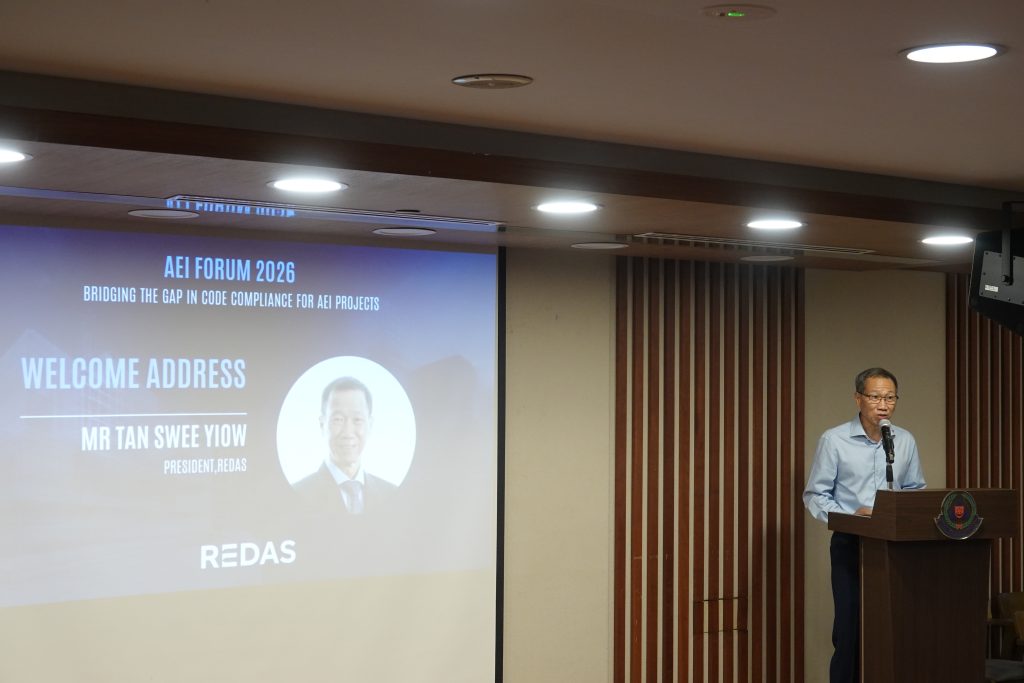
Welcome Address
REDAS President Mr Tan Swee Yiow opened the forum by highlighting that AEI is hard because older buildings still have to meet today’s codes. He emphasised that owners, consultants and regulators need to talk early to solve this together.
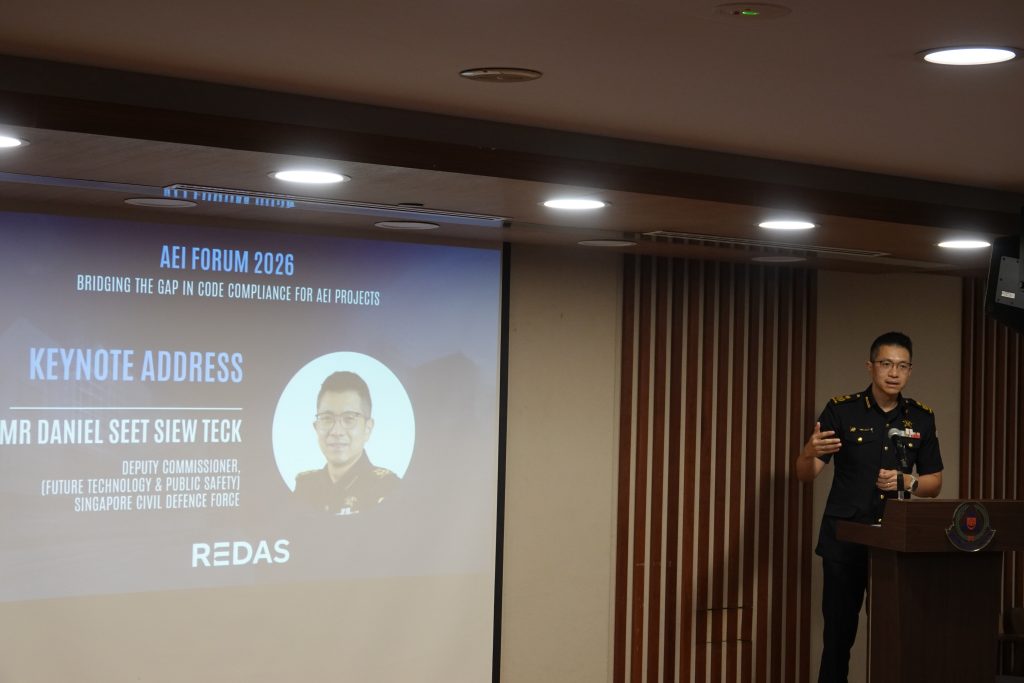
Keynote Address
Mr Daniel Seet Siew Teck, Deputy Commissioner (Future Technology & Public Safety), SCDF, delivered the keynote address, emphasising that as Singapore’s buildings age, AEI will only get more complex, making it a collective effort for everyone.
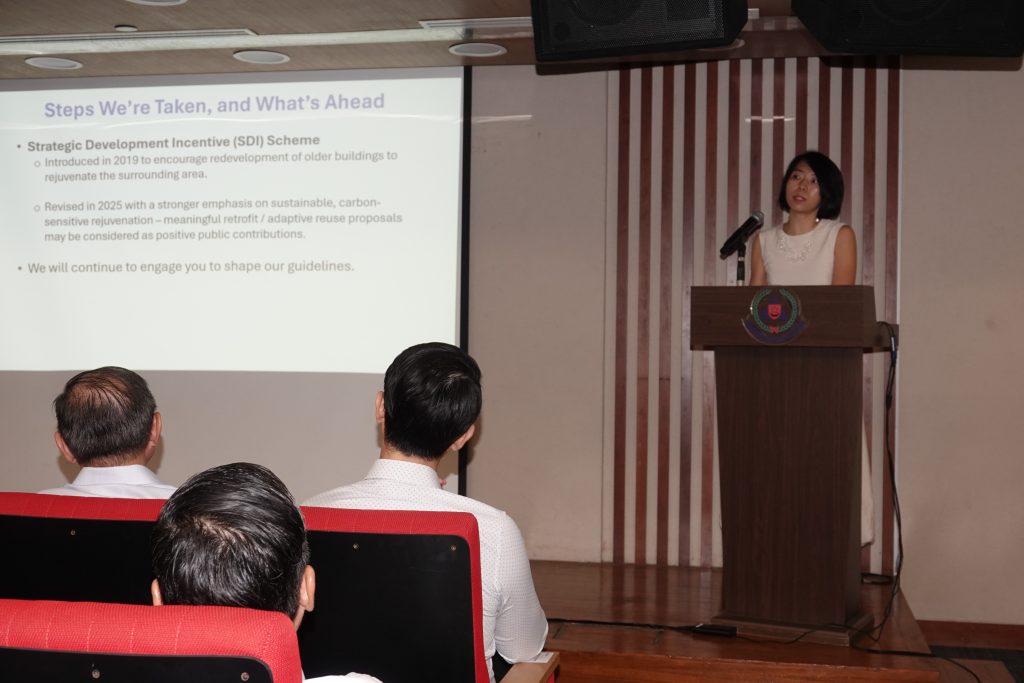
Old Buildings, New Possibilities: Singapore’s approach to urban rejuvenation
Ms Lim Wei Qi, Principal Architect, URA, shared that for suitable buildings, AEI is a practical and economically viable alternative to redevelopment, though not without challenges. She encouraged owners to engage URA early through Outline Applications and the Pre-Application Consultation Service, and highlighted the revised Strategic Development Incentive Scheme, which now recognises retrofit and adaptive reuse.
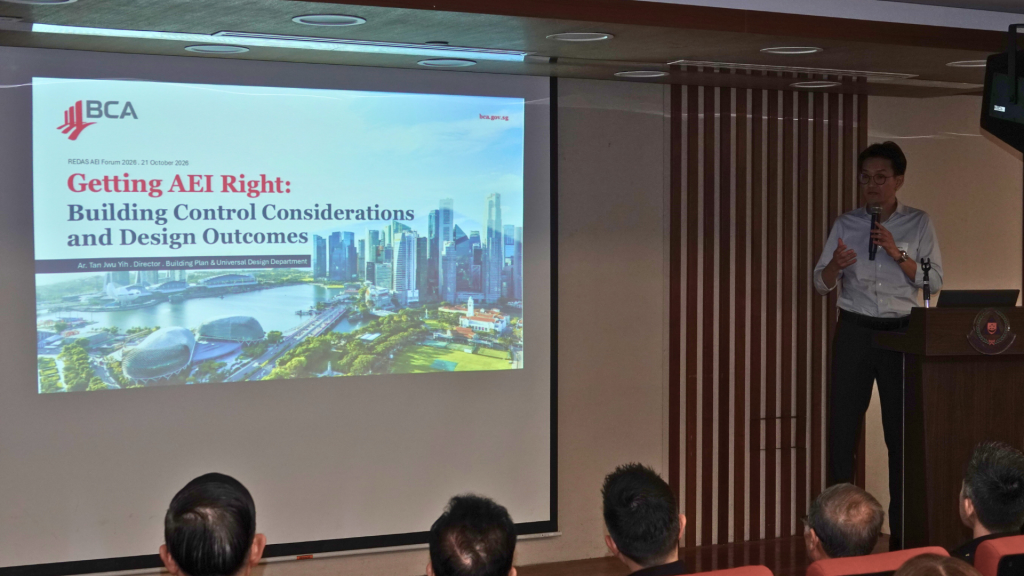
Getting AEI Right: Building Control Considerations and Design Outcomes
Ar Tan Jwu Yih, Director, BCA, explained that BCA’s aim in AEI is not just compliance but projects that are safe, buildable, sustainable and accessible. The regulatory outcome is the same as for new buildings, but the approach adapts to the existing building’s constraints. He urged owners to check structural feasibility early, engage builders early and approach BCA before finalising designs, stressing that regulatory and business outcomes are not opposing goals.
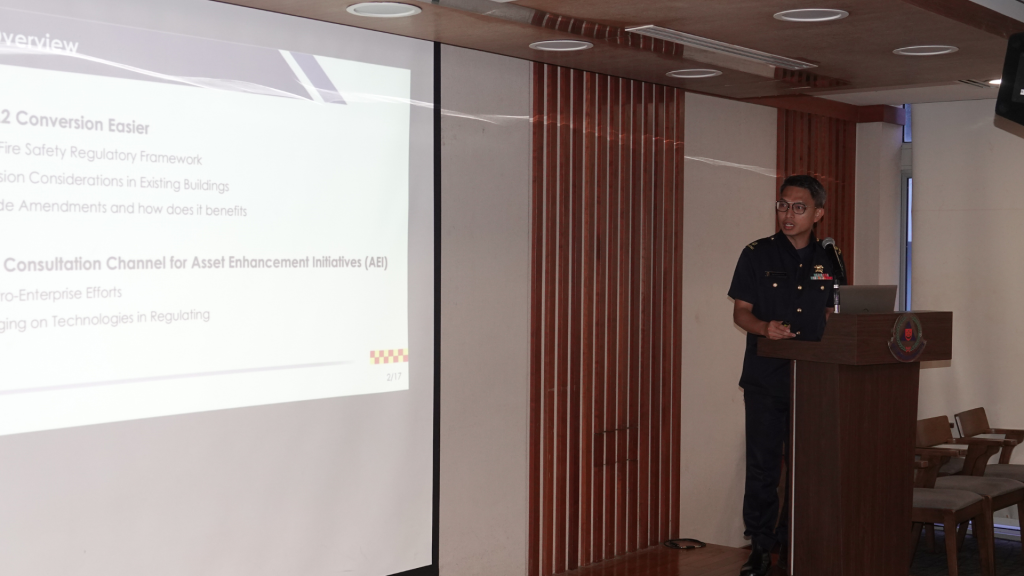
Making SA2 Conversion Easier: Code Amendments and Case Studies
Major Muhammad Izwan Bin Ibrahim, SCDF, shared that the Fire Code now has tailored requirements for SA2, so existing buildings are easier to convert. Conversions can keep existing staircases and fire lifts and use residential travel distances, provided conditions like natural ventilation are met. This means fewer additional works. He advised owners to engage a QP early and consult SCDF before finalising plans.
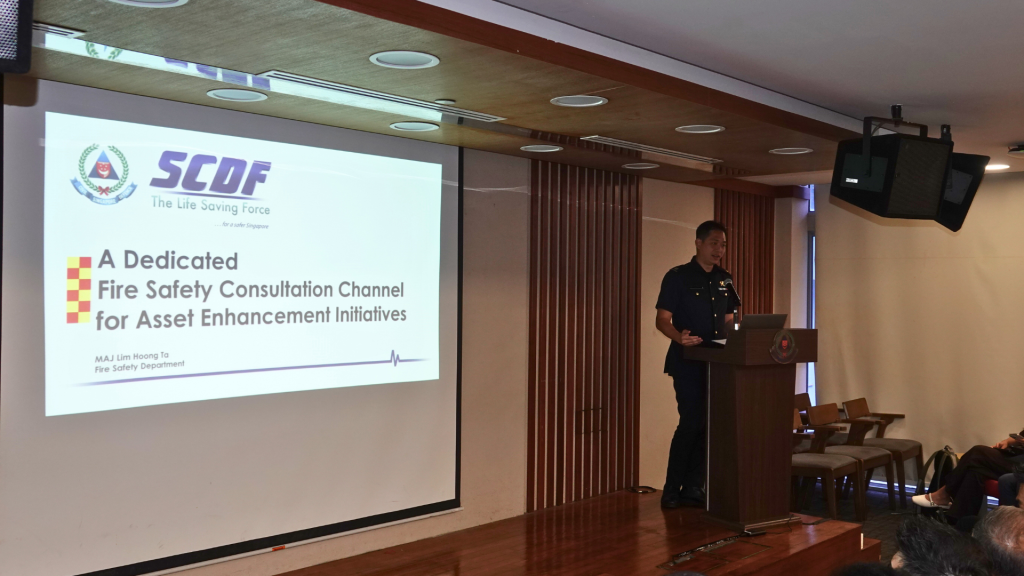
A Dedicated Fire Safety Consultation Channel for Asset Enhancement Initiatives
Major Lim Hoong Ta, SCDF, shared that SCDF has set up a dedicated channel to give owners early guidance on fire safety upgrades for AEI. SCDF does consider site constraints and can grant waivers where reasonable alternatives are proposed, so owners should not assume the Fire Code will be applied rigidly. He advised starting fire safety review at the design stage and appointing a QP early.
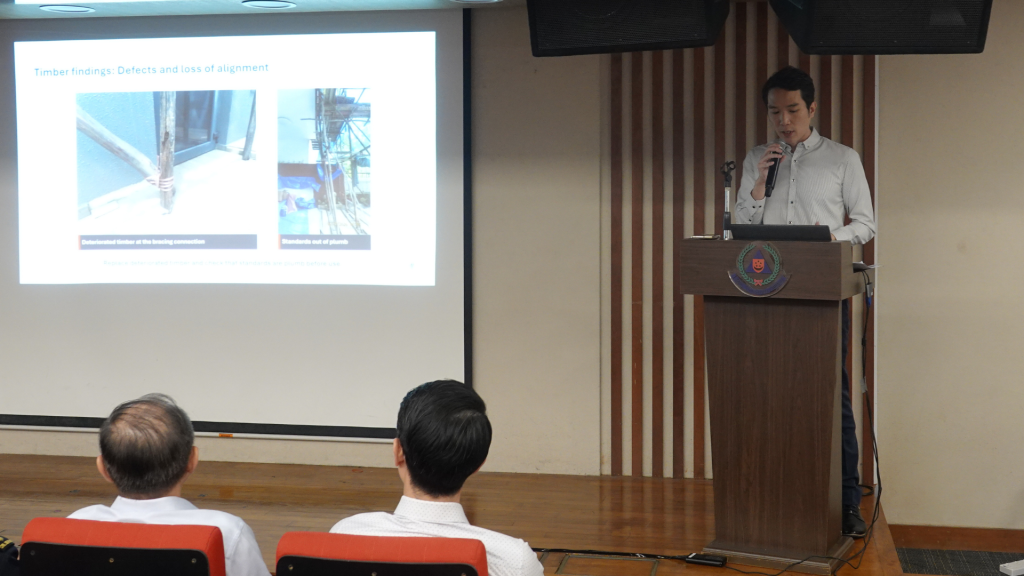
Raising the Standard: Scaffold and Fire Safety in the Construction Sector
Mr Eric Tan, Senior Assistant Director, MOM, shared key scaffold and scaffold fire safety concerns, common inspection findings and regulatory updates.
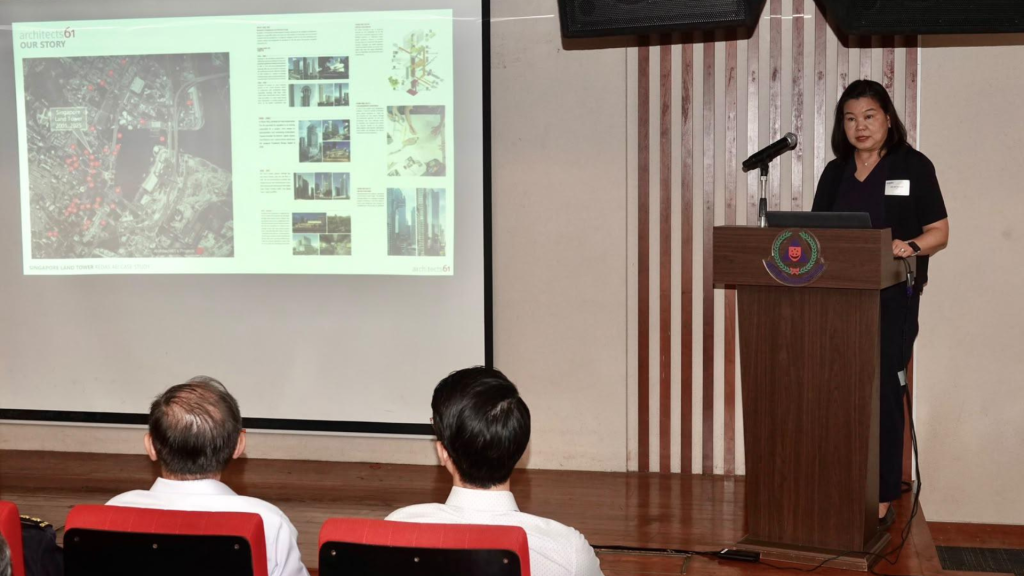
AEI Case Study – Singapore Land Tower
Ar Un Wai Kay, Principal, architects61 Pte Ltd, shared the AEI journey of Singapore Land Tower, illustrating the practical challenges and solutions involved in enhancing an existing commercial development while meeting prevailing regulatory requirements.
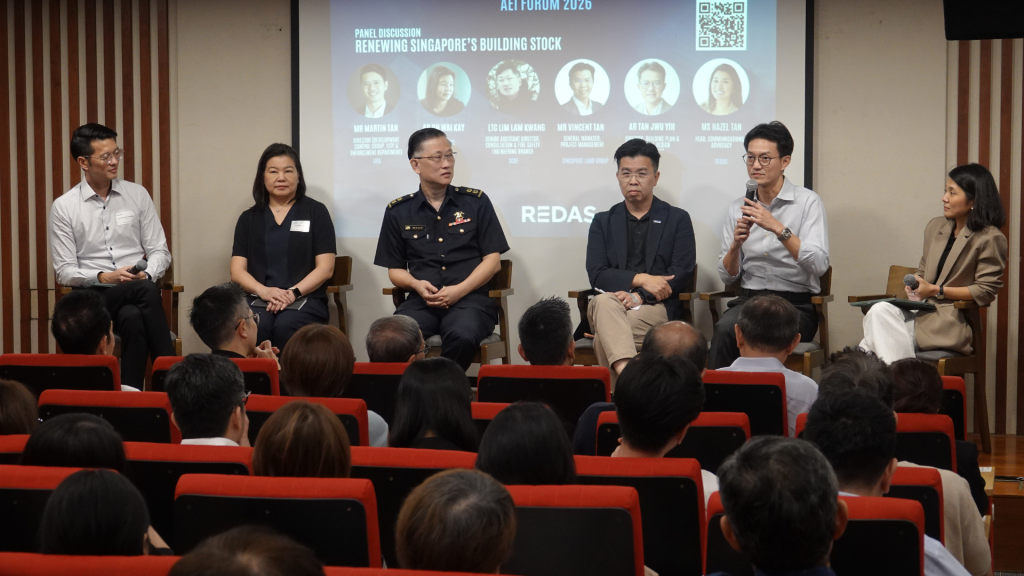
Panel Discussion – Renewing Singapore’s Building Stock — What Works, What Doesn’t, and What’s Next
Moderated by Ms Hazel Tan, Head, Communications & Advocacy, REDAS, the panel featured Mr Martin Tan (URA), Ar Un Wai Kay (architects61), LTC Lim Lam Kwang (SCDF), Mr Vincent Tan (Singapore Land Group) and Ar Tan Jwu Yih (BCA). The panellists shared how government agencies are working together to renew Singapore’s ageing building stock through policies, closer collaboration and continued effort. They agreed that urban renewal is important and that everyone, from regulators to owners and practitioners, has a role to play. They noted that AEI projects will only grow more complex, and that the industry must work towards meeting that complexity together, with agencies and industry looking forward to more collaboration ahead.
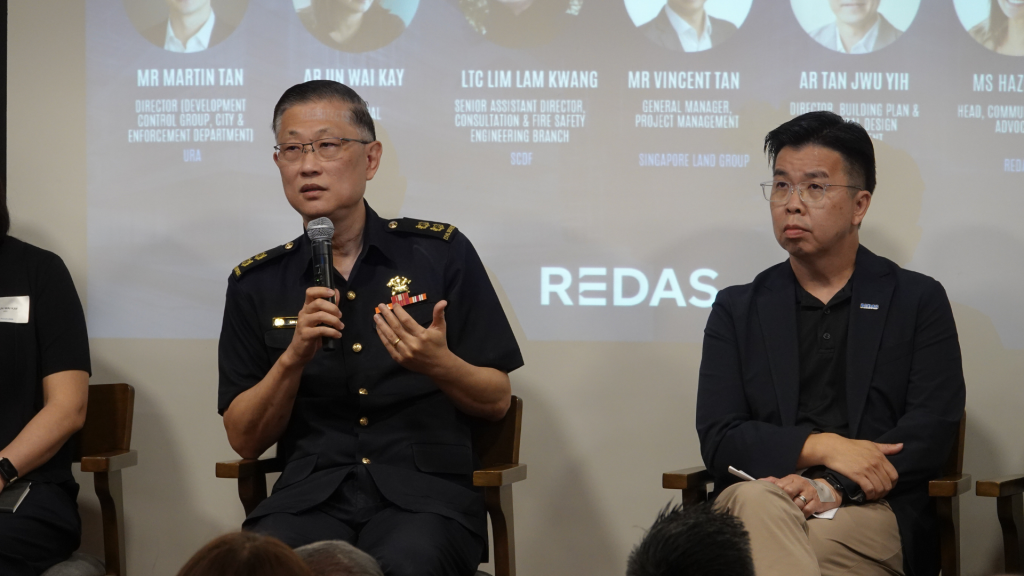
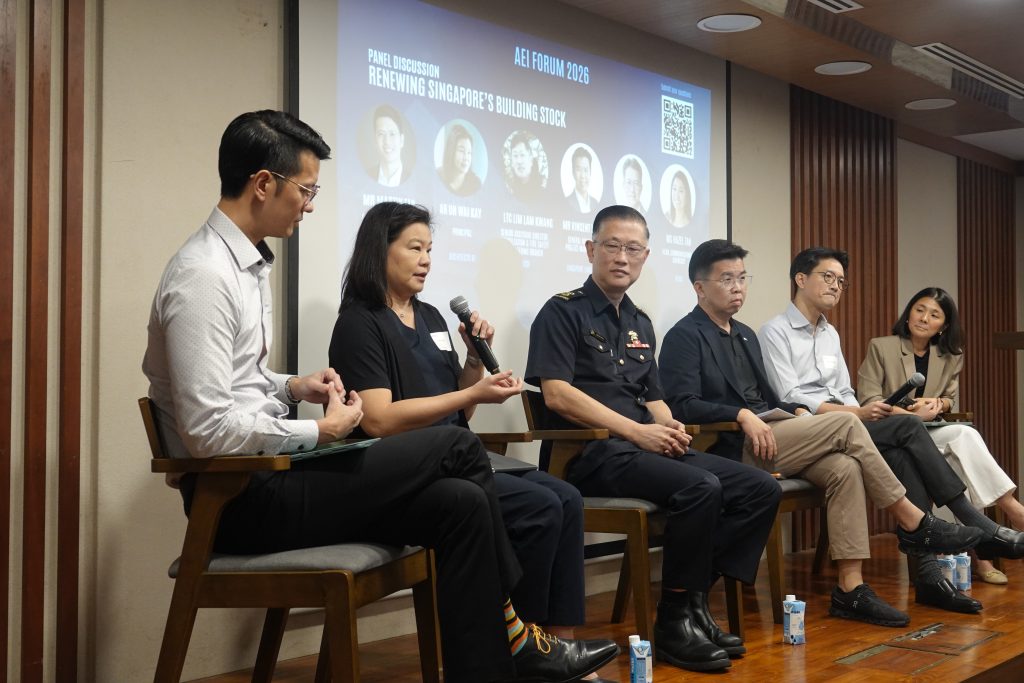
The message from both industry and agencies was clear: as Singapore’s building stock ages, AEI will only become more relevant, even as projects remain complex. The key to navigating these challenges lies in early engagement and planning, realistic expectations, and having the right team in place to deliver successful outcomes.
REDAS extends its sincere appreciation to all our speakers, panellists and participants for their valuable contributions and active participation in making the inaugural AEI Forum a success.